Table of Contents
- Introduction
- Why Convert Your Basement Into a Rental Unit?
- Understanding Legal Requirements in Toronto and the GTA
- Building Code Standards
- Fire Safety & Egress Requirements
- Electrical & Plumbing Compliance
- Zoning and Municipal Regulations
- Planning Your Basement Apartment Conversion
- Budgeting and Financial Planning
- Working with a Professional Contractor
- Designing a Functional Rental Layout
- Key Features of a High-Quality Rental Unit
- Kitchen and Bathroom Requirements
- Adequate Soundproofing
- Lighting and Natural Light
- Separate Entrances
- Heating, Ventilation, and Insulation
- The Permit and Inspection Process
- Building Permit
- Plumbing Permit
- Electrical Permit
- Final Occupancy Approval
- Basement Apartment Cost Breakdown
- Design Trends for Basement Rental Units in 2025
- Avoiding Common Mistakes
- Working with 905 Reno
- Conclusion
Introduction
Turning your basement into a rental unit is one of the most practical and profitable home upgrades available to Toronto and GTA homeowners. With housing demand rising and rental inventory tightening, creating a legal secondary suite can significantly increase your monthly income while boosting your property value.
This guide covers everything you need to know—from legal requirements to design choices, costs, and inspections. Whether you are planning a brand-new legal basement suite or upgrading an existing non-compliant unit, 905 Reno provides end-to-end services to ensure your project meets all Ontario Building Code standards.
Why Convert Your Basement Into a Rental Unit?
Transforming an underused basement into a well-designed rental suite comes with several long-term benefits:
Additional Monthly Income
Rental units in Toronto and the GTA can generate anywhere from $1,400 to over $2,200 per month, depending on location, size, and amenities.
Increased Property Value
A legal secondary suite increases your home’s appraisal value and resale appeal.
Better Use of Space
Basements often go unused, yet they offer prime square footage that can be transformed into a functional living space.
Support for Multigenerational Living
Some homeowners build rental suites for extended family members, then rent it out later.
Understanding Legal Requirements in Toronto and the GTA
A legal basement rental unit must comply with Ontario Building Code, fire code, and municipal zoning bylaws.
Building Code Standards
Key structural requirements include:
- Minimum ceiling height (often 6’5” depending on municipality)
- Proper insulation values
- Drainage and moisture control
- Safe stair design
- Proper room sizes
Fire Safety & Egress Requirements
Legal basement apartments require:
- A second means of egress (escape window or exit door)
- Fire-rated drywall barriers
- Smoke and CO detectors
- Fire separation between units (ceilings and walls)
Electrical & Plumbing Compliance
All major work must be completed by licensed trades and inspected by:
- ESA (Electrical Safety Authority)
- Municipal plumbing inspectors
Zoning and Municipal Regulations
Different municipalities have unique rules regarding:
- Parking requirements
- Maximum unit size
- Permit fees
- Lot coverage limitations
905 Reno ensures full compliance for properties in Toronto, Scarborough, Mississauga, Brampton, Vaughan, Richmond Hill, Markham, and surrounding areas.
Planning Your Basement Apartment Conversion
Budgeting and Financial Planning
Planning early helps determine:
- Construction costs
- Permit fees
- Furniture and appliances
- Future rental income
- Contingency fund (10–15%)
Working with a Professional Contractor
A qualified renovation contractor like 905 Reno handles:
- Architectural drawings
- Permit applications
- Engineering where required
- Full construction and inspections
- Final occupancy certification
They also ensure all work follows legal requirements to avoid rental fines or forced unit closure.
Designing a Functional Rental Layout
Important considerations include:
- Privacy between units
- Optimal placement of kitchen and bathroom
- Maximizing natural light
- Open-concept layouts for small basements
- Strategic storage solutions
Key Features of a High-Quality Rental Unit
Kitchen and Bathroom Requirements
Legal units must include:
- A fully functional kitchen with range, sink, and ventilation
- A private bathroom with ventilation
- Durable, low-maintenance materials
Adequate Soundproofing
Tenants expect acoustic privacy. This is achieved with:
- Insulated ceilings and walls
- Resilient channels
- Acoustic drywall
Lighting and Natural Light
LED lighting, bright finishes, and enlarged windows enhance the rental experience.
Separate Entrances
A private entrance is required for most legal units, offering safety and improved tenant satisfaction.
Heating, Ventilation, and Insulation
Basement apartments must have:
- Independent or shared HVAC systems meeting OBC
- Proper airflow and ventilation
- Moisture control
- Upgraded insulation
The Permit and Inspection Process
Building Permit
Required for:
- Structural changes
- Egress window installation
- Wall reconstruction
- Room creation
Plumbing Permit
Needed for new bathrooms, kitchens, or drainage modifications.
Electrical Permit
Inspections by ESA are mandatory for rental legality and insurance compliance.
Final Occupancy Approval
This confirms the basement apartment meets all requirements and is safe to rent.
905 Reno manages the full permit lifecycle.
Basement Apartment Cost Breakdown
Costs vary depending on:
- Basement size
- Condition of existing structure
- Whether underpinning is required
- Level of finishes
- Municipal permit fees
Typical cost ranges for a legal suite in 2025:
- Basic rental-ready suites: $60,000–$85,000
- Mid-range modern suites: $85,000–$120,000
- High-end legal suites: $120,000–$180,000+
add variables include:
- Egress window: $3,000–$6,500
- Washroom build: $8,000–$20,000
- Kitchen installation: $10,000–$30,000
- Soundproofing upgrades: $2,000–$8,000
Design Trends for Basement Rental Units in 2025
Open-Concept Layouts
Open layouts create a bright, spacious feel.
Durable, Low-Maintenance Finishes
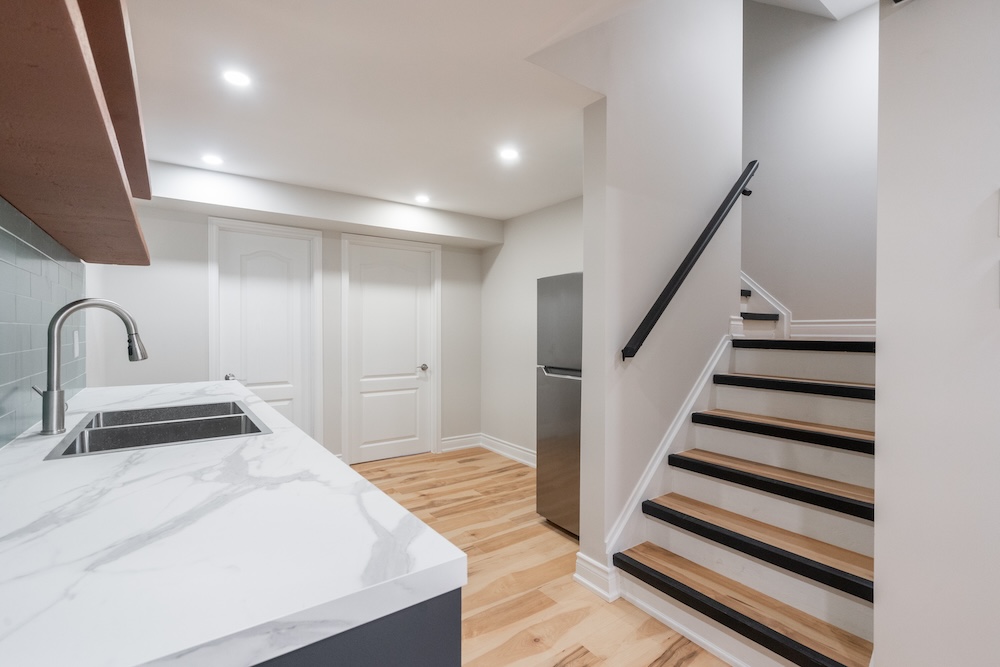
Vinyl plank flooring, moisture-resistant cabinetry, and stone-look countertops are ideal.
Neutral Colour Palettes
Light neutrals maximize perceived space and appeal to a wide variety of tenants.
Compact, Efficient Kitchens
Appliance garages, slim refrigerators, and simple layouts increase functionality.
Improved Insulation and Comfort
Tenants expect year-round temperature stability and good airflow.
Avoiding Common Mistakes
- Skipping permits
- Poor waterproofing
- Inadequate soundproofing
- Choosing cheap finishes
- Ignoring tenant privacy
- Hiring unlicensed trades
- Failing inspections due to non-compliance
Working with a professional prevents expensive setbacks.
Working with 905 Reno
905 Reno specializes in full-service legal basement apartment conversions, offering:
- Architectural plans
- Permit applications
- Full construction and finishing
- ESA, HVAC, and building inspections
- Waterproofing and moisture control
- Kitchen, bathroom, and flooring installation
- Fire and safety compliance
- High-quality, tenant-ready finishes
With years of experience renovating homes across Toronto and the GTA, 905 Reno ensures your basement becomes a safe, stylish, and profitable income-generating unit.
Conclusion
Converting your basement into a rental unit is one of the smartest investments Toronto and GTA homeowners can make in 2025. With rising rental demand and increasingly strict safety standards, working with an experienced renovation contractor ensures compliance, durability, and long-term profitability.
When you partner with 905 Reno, your secondary suite is built with precision, professionalism, and full building code compliance—so you can enjoy secure rental income and increased property value for years to come.