
If you or someone in your family is dealing with reduced mobility, balance concerns, or a condition that makes daily tasks harder than they used to be, the bathroom is usually the first room that needs to change. Slippery tile, high tub walls, narrow doorways, and poor lighting turn a space that should be safe into one of the most dangerous rooms in the house.
Accessible home renovations in the GTA aren’t just about safety — they’re about independence. The right upgrades let people stay in their own homes longer, avoid the cost of assisted living, and maintain dignity in their daily routine. And in Ontario, there are real grant programs that help cover the cost. At 905 Reno, we design and build accessible bathrooms, main-floor living conversions, and barrier-free spaces for homeowners across Toronto and the GTA.
This guide covers the most impactful accessibility upgrades, what they actually cost, and which Ontario grants and tax credits can offset your investment.
Key Takeaways
- A curbless walk-in shower conversion is the single highest-impact accessibility upgrade, costing $8,000–$18,000 in the GTA and eliminating the most common fall hazard in the home.
- Ontario grants can cover $15,000–$22,500+ in combined funding, including the Home and Vehicle Modification Program ($15,000) and Ontario Renovates ($15,000–$25,000 for low-income seniors).
- A $30,000–$60,000 accessible renovation pays for itself in under two years compared with Ontario assisted-living facilities that charge $4,000–$7,000 per month.
- Grab bars must be lag-bolted into solid wood blocking or continuous plywood backing — bars screwed into drywall alone will rip out under load and cause falls.
- Universal design boosts resale value across the GTA: curbless showers, lever handles, and wider doorways attract downsizers and multi-generational buyers without limiting your buyer pool.
Table of Contents
- Why Accessible Renovations Matter More Than Ever in the GTA
- The Bathroom: Where Accessible Renovations Start
- Beyond the Bathroom — Whole-Home Accessibility Upgrades
- Ontario Grants, Tax Credits, and Funding Programs
- What Accessible Renovations Cost in Toronto
- Universal Design — Building for Everyone, Not Just Seniors
- Frequently Asked Questions
- Make Your Home Work for Your Life
Why Accessible Renovations Matter More Than Ever in the GTA
The GTA’s population is aging, and more families are choosing to keep their parents and grandparents at home rather than move them into care facilities. An assisted-living facility in Ontario can cost $4,000–$7,000 per month. By comparison, a $30,000–$60,000 accessible renovation pays for itself in under two years — while keeping your loved one in the home they know, surrounded by family.
But accessibility isn’t only about aging. Families with young children, anyone recovering from surgery, and homeowners planning for the long term all benefit from barrier-free design. The upgrades that make a home safer for a 75-year-old also make it more comfortable for a 35-year-old with a knee injury or a parent carrying a toddler.
The Bathroom: Where Accessible Home Renovations Start
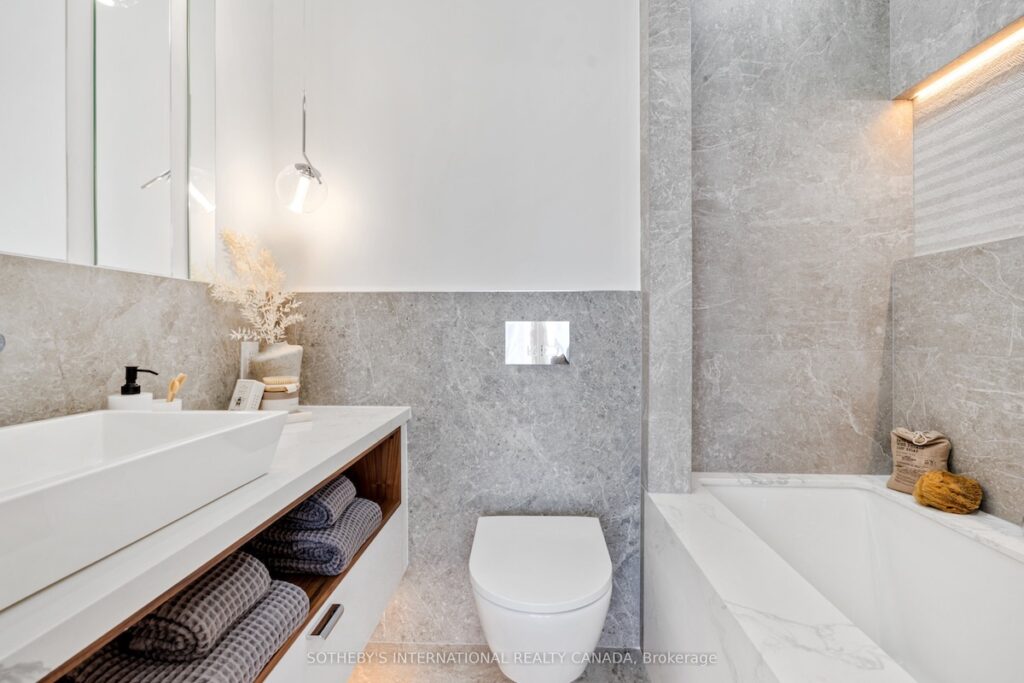
Bathrooms are the most common site of falls and injuries in the home. Wet floors, high tub walls, and cramped layouts create real risk — especially for anyone with limited mobility. An accessible bathroom renovation addresses these hazards while creating a space that still looks and feels like a modern, well-designed room.
Walk-In and Curbless Showers
Removing the tub and replacing it with a curbless, zero-threshold shower is the single highest-impact accessibility upgrade. A properly built curbless shower allows wheelchair or walker access, eliminates the step-over hazard, and can include a fold-down bench, handheld showerhead, and thermostatic valve to prevent scalding. Building one correctly requires lowering the subfloor to create proper drainage slope — this is precision work that must be done by experienced tradespeople.
Grab Bars — Installed Properly
Grab bars are only as strong as what they’re attached to. A bar screwed into drywall will rip out under load — potentially causing the very fall it was supposed to prevent. Proper installation requires lag-bolting into solid wood blocking or structural framing behind the wall. At 905 Reno, we install continuous plywood backing behind the tile during every accessible bathroom build, so grab bars can be placed exactly where they’re needed and repositioned later without opening walls.
Wider Doorways
Standard bathroom doors are 24–28 inches wide — too narrow for a wheelchair or walker. Widening to 34–36 inches requires reframing the opening. If the wall is load-bearing, a structural header must be installed. This is one of those changes that’s relatively affordable during a renovation but very expensive to retrofit later.
Comfort-Height Toilets and Lever Hardware
Comfort-height toilets (17–19 inches vs. standard 15 inches) make sitting and standing significantly easier. Lever-style faucets and door handles replace knobs that require grip strength — a simple swap that makes a big difference for anyone with arthritis or limited hand function.
Beyond the Bathroom — Whole-Home Accessibility Upgrades
While bathrooms are the priority, true aging-in-place readiness extends throughout the home. 905 Reno’s renovation services cover the full scope of accessibility work:
- Main-floor bedroom conversions — eliminating the need to use stairs daily
- Kitchen modifications — lowered countertops, pull-out shelving, side-opening ovens
- Ramp construction — exterior ramps with proper slope, non-slip surfaces, and handrails
- Stairlift or elevator rough-in — structural preparation for future lift installation
- Flooring transitions — removing trip hazards, leveling thresholds, installing slip-resistant surfaces
- Lighting upgrades — motion-sensor LED pathways from bedroom to bathroom
The smartest approach is to build accessibility features into a renovation you’re already planning. Adding grab-bar blocking during a bathroom renovation costs almost nothing extra. Retrofitting it after the tile is installed costs thousands.
Ontario Grants, Tax Credits, and Funding Programs
One of the biggest reasons GTA homeowners delay accessibility renovations is cost. But several government programs exist specifically to help — and most homeowners don’t know about them.
| Program | Maximum Funding | Who Qualifies | What It Covers |
|---|---|---|---|
| Home and Vehicle Modification Program (HVMP) | $15,000 lifetime | Ontario residents with disabilities | Grab bars, roll-in showers, ramps, widened doorways |
| Ontario Renovates | $15,000–$25,000 | Low-income seniors or persons with disabilities | Home accessibility modifications including bathrooms |
| Multi-Generational Home Renovation Tax Credit (Federal) | $7,500 (15% on $50,000) | Homeowners adding a secondary suite for a qualifying relative | Construction of a self-contained secondary dwelling unit |
| Home Accessibility Tax Credit (Federal) | $1,500 (15% on $10,000) | Seniors 65+ or persons eligible for the disability tax credit | Grab bars, walk-in showers, ramps, handrails |
| City of Toronto Basement Flooding Protection Subsidy | Up to $3,400 | Toronto homeowners | Sump pumps, backwater valves (relevant for basement accessibility) |
905 Reno can help you understand which programs apply to your situation and ensure your renovation meets the eligibility requirements. We provide the detailed invoices, documentation, and scope descriptions that these programs require.
What Accessible Renovations Cost in Toronto
Costs vary based on scope, but here are realistic ranges for common accessibility upgrades in the GTA:
| Upgrade | Typical Cost Range (GTA) |
|---|---|
| Grab bar installation (properly blocked) | $200–$600 per bar |
| Tub-to-curbless shower conversion | $8,000–$18,000 |
| Doorway widening (non-load-bearing wall) | $800–$2,500 |
| Doorway widening (load-bearing wall) | $3,000–$6,000 |
| Comfort-height toilet replacement | $500–$1,200 installed |
| Full accessible bathroom renovation | $25,000–$55,000 |
| Main-floor bedroom conversion | $15,000–$40,000 |
| Exterior ramp (wood or aluminum) | $3,000–$10,000 |
When you factor in available grants ($15,000–$22,500+ in combined funding) and the cost of not renovating (assisted living at $4,000–$7,000/month), the math strongly favours investing in your home.
Universal Design — Building for Everyone, Not Just Seniors
Universal design means creating spaces that work for people of all ages and abilities — without looking like a medical facility. A curbless shower with frameless glass looks contemporary and sleek. Lever door handles are modern and elegant. Wider hallways feel more open and spacious. These features don’t scream “accessibility” — they simply make the home better for everyone who lives in it.
At 905 Reno, we approach every accessibility project with design quality in mind. We use the same premium tile, fixtures, and finishes we’d use in any high-end renovation — the difference is in the layout engineering, the structural backing, and the attention to clearances and slopes that make the space truly barrier-free.
If you’re already planning a bathroom renovation or a home addition, building in universal design features now costs a fraction of what it would to retrofit later. It also increases your home’s resale appeal — accessible homes attract a wider pool of buyers.
Frequently Asked Questions
What is the most important accessible renovation for seniors?
Converting a bathtub to a curbless walk-in shower is the single highest-impact upgrade. It eliminates the most common fall hazard in the home and allows safe, independent bathing for years longer.
Can I get a grant for an accessible bathroom renovation in Ontario?
Yes. The Home and Vehicle Modification Program (HVMP) provides up to $15,000 for home accessibility modifications. Ontario Renovates offers $15,000–$25,000 for low-income seniors. The federal Home Accessibility Tax Credit provides up to $1,500 back at tax time.
Do grab bars need to be installed into studs?
Yes — grab bars must be lag-bolted into solid wood framing or continuous plywood backing. Bars screwed into drywall alone will fail under load and can cause serious injury. Proper blocking should be installed during the renovation before tile goes up.
How wide does a doorway need to be for wheelchair access?
A minimum clear opening of 32 inches is required, but 34–36 inches is recommended for comfortable daily use. This typically requires reframing the rough opening and may involve structural work if the wall is load-bearing.
Is a curbless shower hard to build properly?
Yes — it requires lowering the subfloor, creating precise drainage slope, and applying commercial-grade waterproofing. Done incorrectly, water will flood adjacent rooms. This is specialized work that should only be handled by experienced renovation contractors.
Will accessible renovations increase my home’s resale value?
Yes, especially in the GTA where the aging population is growing. Homes with accessible features attract a broader range of buyers, including downsizers and multi-generational families. Universal design features add value without limiting your buyer pool.
Make Your Home Work for Your Life

Whether you need a simple grab-bar installation or a complete barrier-free bathroom build, 905 Reno designs accessible spaces that are safe, beautiful, and built to code. We handle everything — from assessing your home’s layout to coordinating permits, structural work, and finishing.
Contact 905 Reno for a free in-home consultation. Let’s talk about what your home needs — and what programs can help pay for it.