
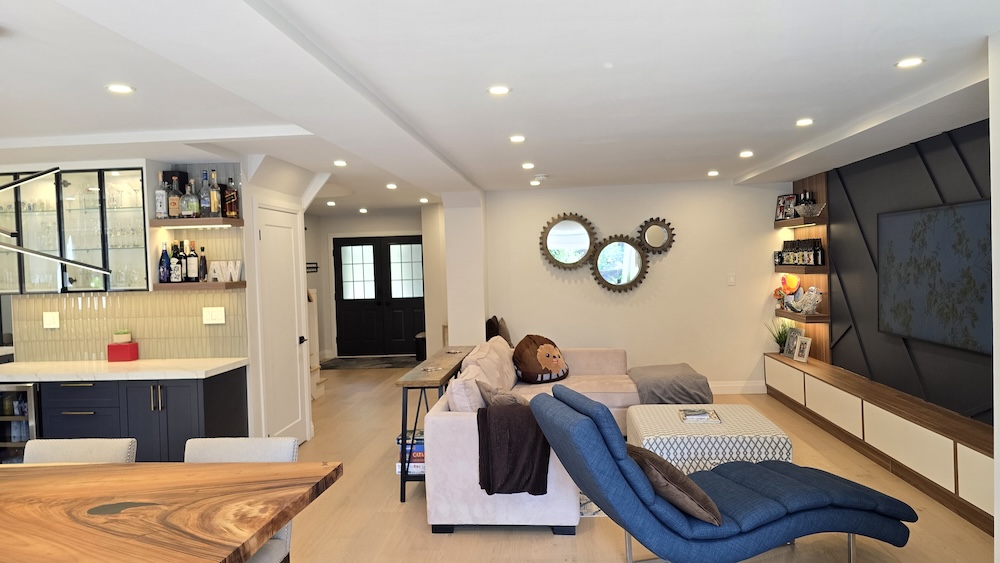
Housing prices across the GTA keep climbing, adult children are staying home longer, and aging parents need more support than ever. Instead of buying a second property or moving into a care facility, more Toronto-area families are choosing a different path: renovating one home to fit three generations under the same roof.
A multi-generational home renovation in Toronto isn’t just a trend — it’s a practical financial decision backed by real government incentives. The federal Multi-Generational Home Renovation Tax Credit now offers up to $7,500 back on qualifying projects. At 905 Reno, we help GTA families plan and build in-law suites, secondary units, and whole-home reconfigurations that give every generation their own space — without giving up proximity.
This guide covers what multi-generational renovations actually involve, what they cost, how to qualify for the federal tax credit, and what design decisions make or break the project.
Key Takeaways
- The federal Multi-Generational Home Renovation Tax Credit gives eligible GTA families a 15% refundable credit on up to $50,000 of expenses — a maximum benefit of $7,500.
- A legal basement in-law suite costs $80,000–$150,000 in the GTA, while a second-storey addition runs $150,000–$350,000 and a garden suite or laneway house $200,000–$400,000+.
- Renovating beats buying in Toronto: with average GTA detached homes above $1.3 million and assisted living at $4,000–$7,000 monthly, families invest $100,000–$300,000 in the home they own.
- Qualifying suites must be self-contained with a private entrance, kitchen or kitchenette, bathroom, and sleeping area — built for a related senior 65+ or person with a disability.
- Separate entrances, sound insulation, and independent climate control are the design decisions that let three generations live comfortably under one roof anywhere in Toronto and the GTA.
Table of Contents
- Why Multi-Generational Living Is Surging in the GTA
- Types of Multi-Generational Renovations
- Design Principles That Keep the Peace
- The $7,500 Federal Tax Credit — How to Qualify
- What Multi-Generational Renovations Cost in Toronto
- Permits, Zoning, and Ontario Building Code
- Frequently Asked Questions
- Build a Home That Fits Your Whole Family
Why Multi-Generational Living Is Surging in the GTA
Three forces are driving this shift across Toronto, Mississauga, Markham, Ajax, and the rest of the GTA. First, housing costs — the average detached home in the GTA now exceeds $1.3 million. Buying a second property for aging parents or adult children isn’t financially realistic for most families. Second, cultural values — many GTA households come from traditions where extended family living is the norm, and they’re looking for homes that support it. Third, eldercare costs — premium assisted-living facilities in Ontario run $4,000–$7,000 per month, making a one-time renovation investment far more economical.
The result: families are choosing to invest $100,000–$300,000 in their existing home rather than taking on $500,000+ in new mortgage debt. It’s not just about saving money — it’s about keeping the family together while giving everyone the privacy they need.
Types of Multi-Generational Home Renovations
Not every multi-gen renovation looks the same. The right approach depends on your property, your family’s needs, and your local zoning rules. Here are the most common configurations 905 Reno builds across the GTA:
Basement In-Law Suite
The most popular option for GTA families. A finished basement becomes a self-contained unit with its own bedroom, bathroom, kitchenette, and separate entrance. If you’re creating a legal secondary suite, it must meet Ontario Building Code requirements for ceiling height (minimum 6’5″ in most areas), egress windows, fire separation, and independent HVAC.
Main-Floor Suite for Aging Parents
For families with a parent who can’t manage stairs, converting a main-floor room into a bedroom with an accessible ensuite bathroom is often the best solution. This typically involves adding a three-piece bathroom, widening doorways, and rethinking the main-floor layout to create a private zone.
Second-Storey Addition
When the lot can’t expand outward, going up is the answer. A second-storey addition can add a complete primary suite, two bedrooms, and a full bathroom — creating dedicated space for one generation while the main floor serves another.
Garden Suite / Laneway House
Ontario’s More Homes Built Faster Act has made it easier to build garden suites and laneway houses on residential lots. These detached units offer the most privacy but require the highest investment ($150,000–$350,000+) and carry their own permitting requirements.
Design Principles That Keep the Peace
The biggest mistake in multi-generational renovations isn’t structural — it’s designing without enough separation. Three generations can live happily under one roof, but only if each has their own private space to retreat to. Here’s what makes the difference:
- Separate entrances — even if just a side door to the basement, independence starts at the front door
- Sound insulation between units — proper sound-dampening insulation in shared ceilings/floors/walls prevents friction
- Independent climate control — each generation should be able to control their own thermostat
- Dedicated kitchen or kitchenette — shared kitchens work for a week; private cooking space works for years
- Private bathroom for each unit — non-negotiable for long-term harmony
- Shared outdoor or common space — a backyard, deck, or large kitchen where the family can come together by choice
At 905 Reno, we walk every multi-generational family through these design decisions before a single wall is touched — because getting the layout wrong is extremely expensive to fix after construction.
The $7,500 Federal Tax Credit — How to Qualify
Canada’s Multi-Generational Home Renovation Tax Credit (MGHRTC) is one of the most valuable incentives available to GTA families right now. Here’s how it works:
| Detail | What You Need to Know |
|---|---|
| Credit amount | 15% refundable credit on up to $50,000 of eligible expenses |
| Maximum benefit | $7,500 |
| Who qualifies | Homeowner adding a secondary suite for a related senior (65+) or person with a disability |
| Qualifying relatives | Parent, grandparent, child, grandchild, sibling, aunt, uncle, niece, nephew |
| Unit requirements | Must be a self-contained dwelling with private entrance, kitchen, bathroom, and sleeping area |
| How to claim | On your annual tax return, using form T1 with supporting invoices and documentation |
The key requirement is that the secondary unit must be self-contained — a bedroom with a shared bathroom doesn’t qualify. The unit needs its own entrance, kitchen or kitchenette, bathroom, and sleeping area. 905 Reno designs every qualifying project to meet these requirements from the start, so you don’t lose the credit because of a design oversight.
What Multi-Generational Renovations Cost in Toronto

| Project Type | Typical Cost Range (GTA) |
|---|---|
| Legal basement in-law suite (full build) | $80,000–$150,000 |
| Main-floor suite conversion (bedroom + ensuite) | $40,000–$90,000 |
| Second-storey addition (2 bedrooms + bathroom) | $150,000–$350,000 |
| Garden suite / laneway house | $200,000–$400,000+ |
| Accessibility upgrades (grab bars, curbless shower, ramp) | $15,000–$55,000 |
Compare these costs to the alternative: purchasing a second property in the GTA ($600,000–$1.5M+) or paying for assisted living ($48,000–$84,000 per year). A multi-generational renovation builds equity into a home you already own while keeping family together.
Permits, Zoning, and Ontario Building Code
Multi-generational renovations almost always require building permits, and if you’re creating a legal secondary unit, you’ll need to meet specific Ontario Building Code requirements. These include minimum ceiling heights, egress window sizing, fire separation between units, smoke and carbon monoxide detectors, and independent mechanical systems.
Zoning varies by municipality — what’s permitted in Toronto may require a minor variance in Markham or Oakville. Some municipalities limit the number of dwelling units per lot or have specific setback requirements for garden suites. 905 Reno handles all permit applications, zoning reviews, and inspection scheduling as part of the project. We confirm what’s allowed on your specific property before design begins.
If you’ve been thinking about turning your basement into a rental unit or a family suite, the permit and code requirements are similar — and getting them right from the start saves time, money, and legal headaches.
Frequently Asked Questions
What counts as a “self-contained unit” for the federal tax credit?
The unit must have its own private entrance, bathroom, kitchen or kitchenette, and sleeping area. A bedroom with access to a shared bathroom does not qualify. The unit must be for a qualifying relative who is 65+ or living with a disability.
Can I build an in-law suite in my basement in Toronto?
Yes — Toronto permits secondary suites in most residential zones. The unit must meet Ontario Building Code requirements for ceiling height, fire separation, egress, and ventilation. A building permit is required.
How much does a basement in-law suite cost in the GTA?
A full legal basement in-law suite typically costs $80,000–$150,000 in the GTA, depending on the level of finishes, plumbing complexity, and whether underpinning is required to meet ceiling height requirements.
Do I need a separate entrance for an in-law suite?
For the federal tax credit, yes — the unit must have a private entrance. For Ontario Building Code compliance, a secondary suite needs a separate means of egress (exit) in case of fire. This can be an exterior door or an egress window meeting minimum size requirements.
Will a multi-generational renovation increase my property value?
Yes. A legal secondary suite adds both livable square footage and income potential. In the GTA, homes with legal basement apartments or in-law suites consistently sell for more than comparable homes without them, and attract a wider range of buyers.
Can I rent out the in-law suite if my family doesn’t need it anymore?
Yes — if the suite was built as a legal secondary unit with proper permits and inspections, you can rent it out. This can generate $1,500–$2,500+/month in rental income depending on the area, turning your renovation into an ongoing investment.
Build a Home That Fits Your Whole Family
Whether you need a basement in-law suite, a main-floor conversion for an aging parent, or a full home reconfiguration to support three generations, 905 Reno has the experience to design, permit, and build it right. We’ve helped families across Toronto, Markham, Mississauga, Ajax, and the wider GTA create multi-generational spaces that work — for today and for the future.
Contact 905 Reno for a free consultation and let’s plan a renovation that keeps your family together — with space for everyone.