
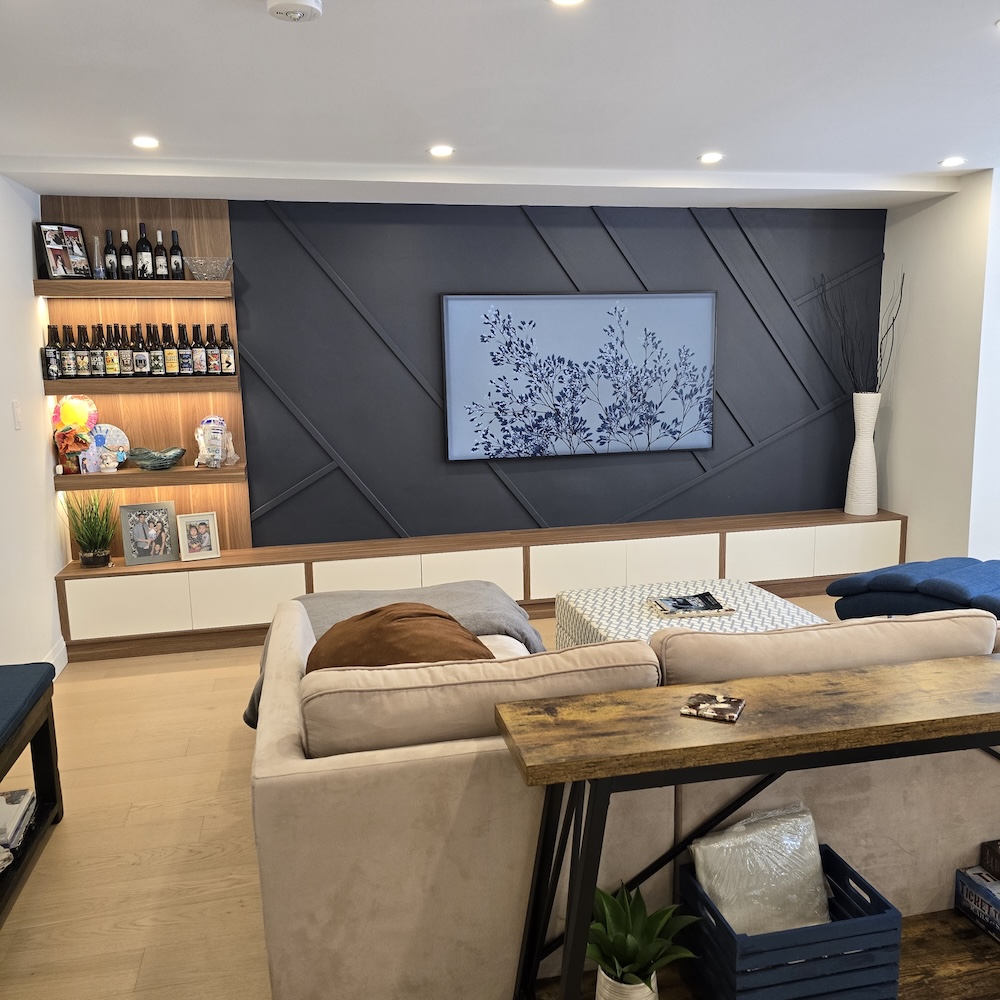
Garage conversion Toronto homeowners commit to in summer 2026 is one of the highest-leverage square-footage upgrades available without an addition. Typical conversion of a single-car garage to a finished living space runs $48,000–$95,000 in the GTA, takes 8–12 weeks on site, and triggers an Ontario Building Code change-of-use permit that affects insulation, egress, and HVAC.
Key Takeaways
- 2026 garage conversion Toronto costs land between $48,000 (single-car to home office or den) and $145,000+ (double garage to fully self-contained suite).
- A change-of-use permit is mandatory in Toronto and across the 905 — what was “storage” becomes “habitable space” and needs to meet OBC insulation, egress, ceiling height, and HVAC requirements.
- The summer build window is real: 8–12 weeks of work plus 4–8 weeks of permit lead time means a June start gets you finished by late fall.
- Detached garage conversions in Toronto can sometimes be approved as garden suites under the city’s 2022 by-law, opening rental income possibilities.
- The hidden cost is the floor: garage slabs were never insulated, never moisture-protected, and almost always need raising — easily $8,000–$14,000 of the budget.
Table of Contents
- Why summer is the right window for a garage conversion
- What you can convert a garage into (and what works in your house)
- 2026 garage conversion costs in the GTA
- Permits, the change-of-use rule, and zoning
- The floor, the HVAC, and the details people miss
- The 8–12 week build: how a conversion lays out
- Why 905 Reno is the right team for garage conversion Toronto
- Frequently asked questions
Why summer is the right window for a garage conversion Toronto homeowners shouldn’t skip
Garage conversions are the renovation that always feels like next year’s project. The garage works fine, the cars fit, the kids’ bikes have somewhere to live. But that 300–600 sq ft of underused floor area is the highest-leverage square footage in your house. Convert it well and you’ve added a real bedroom, a real home office, an in-law suite — for half the price of an equivalent addition.
Summer is the right window for three reasons. First, the build itself is faster in warm weather: the slab work, the wall raising, the exterior cladding can all be done without temporary heating. Second, the permit cycle in Toronto and across the 905 typically takes 4–8 weeks — a June application means a build start in late July and a finish before the holiday slowdown. Third, the trades calendar: insulation, drywall, electrical and HVAC crews all have wider availability in July and August than they will in September and October, when fall renovations crank up.
For GTA homeowners in Scarborough, North York, Etobicoke, Mississauga, Brampton and Vaughan, garage conversions also pair well with broader main-floor reconfigurations. Combining the conversion with a kitchen remodel or a basement refinish reduces mobilization costs and gives the trades one larger project to work through — usually 10–15% cheaper than two separate jobs.
What you can convert a garage into (and what works in your house)
The right end-use depends on three things: whether the garage is attached or detached, what your zoning allows, and what your house actually needs.
Home office, den, or family room is the simplest attached-garage conversion. The space connects to the main floor via the existing internal door, sometimes with that wall opened up entirely. Permit is straightforward — change of use, insulation, HVAC — and the build runs 6–8 weeks. This is the right pick for GTA professionals who needed permanent dedicated office space post-2020 and still do.
Bedroom or guest suite adds a real bedroom (egress window required), an optional ensuite, and a closet. The build is 8–10 weeks. The trade-off: you’re permanently losing a parking spot, which in some Toronto and Mississauga neighbourhoods can affect resale value or trigger a zoning concern about street parking pressure.
Self-contained in-law or rental suite requires a kitchenette, a full bathroom, sometimes a separate entrance, and meets the same standards as a legal basement apartment: separate HVAC zoning, sound separation, sometimes a fire-rated assembly between the suite and the main home. Budget 12 weeks and $90,000+. The ROI math is excellent in GTA neighbourhoods with rental demand — North York, Scarborough, Mississauga, Brampton.
Detached garage to garden suite is the newest option in Toronto since the 2022 garden suite by-law. A detached garage already has a foundation and a roof — converting it into a fully independent living unit is materially cheaper than building a garden suite from scratch. Zoning is the gate; if your property qualifies as-of-right, this is one of the highest-ROI moves available to GTA homeowners in 2026.
2026 garage conversion costs in the GTA
Garage conversion pricing in 2026 reflects the change-of-use complexity. Unlike a renovation of existing habitable space, a conversion has to bring the room up to current Ontario Building Code on every system — insulation, egress, HVAC, electrical, fire separation. The numbers below are typical installed ranges for a 300–500 sq ft single-car garage.
| End use | Permit complexity | Installed range (2026) | Build time |
|---|---|---|---|
| Home office / den | Standard change-of-use | $48,000 – $68,000 | 6–8 weeks |
| Bedroom / guest suite | Plus egress window | $65,000 – $88,000 | 8–10 weeks |
| Bedroom + ensuite | Plus plumbing | $78,000 – $98,000 | 9–11 weeks |
| Self-contained suite | Secondary unit | $90,000 – $135,000 | 10–14 weeks |
| Detached garage → garden suite | Garden suite by-law | $120,000 – $185,000 | 14–20 weeks |
Three line items consistently push garage conversion budgets above quote: raising and insulating the slab (almost universal — $8,000–$14,000), extending the home’s HVAC system into the new room or adding a dedicated mini-split ($4,500–$9,500), and exterior changes if you’re replacing the garage door with a window or wall ($6,000–$12,000). The garage door wall is where most conversions reveal hidden cost — the existing rough opening is huge and rarely sized for a standard window or doorway.
Permits, the change-of-use rule, and zoning
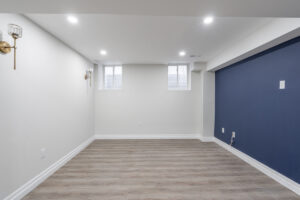
A garage conversion in Toronto and across the 905 always requires a building permit. The reason is the legal classification change — your garage is “storage” or “accessory” use, and a conversion changes it to “habitable space,” which has to meet the Ontario Building Code’s requirements for insulation R-value, egress, ceiling height, ventilation, smoke and CO alarms, and floor moisture protection.
The application is filed through Toronto Building’s permit portal (and parallel municipal portals in Mississauga, Brampton, Vaughan, Markham, Oakville and the surrounding 905). Typical review time is 4–8 weeks for a straightforward conversion, longer if the project includes a secondary unit, zoning variance, or detached garage to garden suite path.
Zoning is the silent gate. Most GTA single-family residential lots permit one secondary suite on an as-of-right basis (basement apartments fall under this), but a converted garage as a second secondary suite — beyond the basement — may need a Committee of Adjustment variance. Toronto’s 2022 garden suite by-law also has lot-area minimums, setback rules, and overlook protections that don’t apply to attached garage conversions but do apply if you’re going the detached-garage-to-garden-suite route. Always confirm zoning with the municipality before signing a quote.
The floor, the HVAC, and the details people miss
Two systems separate a comfortable garage conversion from a cold, draughty room: the floor assembly and the HVAC.
The garage slab was poured without insulation, without a vapour barrier, and almost always with a 1–2% slope toward the door. To become habitable space, the floor needs to be either raised with an insulated sleeper system or covered with a moisture-broken subfloor, insulation, and a flat, level finished surface. The slope under the existing slab doesn’t disappear — it has to be engineered around. Doing this properly costs $8,000–$14,000 on a single-car conversion. Skipping it produces the cold-floor complaint that homeowners regret for the next decade.
HVAC is the second silent killer. The existing forced-air system in the house was sized for the original square footage. Adding 300–500 sq ft of habitable space to that load almost always exceeds the furnace’s capacity at design temperature. The two real solutions are: (a) zone the existing system with a new branch, balanced dampers, and a thermostat in the new room (cheaper, works for small office or den conversions), or (b) install a dedicated ductless mini-split heat pump for the new room ($4,500–$8,500 installed). For self-contained suites the second option is almost always required for proper code-compliant zoning.
Other details that get missed: rim joist insulation where the new wall meets the existing house, fire separation between the new room and any remaining garage space, GFCI-protected outlets, and a proper smoke + CO alarm tied into the home’s panel. The OBC requirements are detailed and unforgiving.
The 8–12 week build: how a garage conversion lays out
A typical attached-garage conversion to a bedroom + ensuite for a Vaughan or Mississauga home runs 9–11 weeks from permit-in-hand to occupancy:
| Phase | Weeks | Activity |
|---|---|---|
| Pre-permit | 4–8 | Design, architect drawings, HVAC sizing, permit application, review. |
| Demo + slab | 1 | Strip interior, address slab slope, install moisture break + insulated subfloor. |
| Exterior + envelope | 2 | Garage door wall reframed, new window/wall installed, exterior cladding integrated. |
| Framing + rough-ins | 2 | Interior walls, ensuite plumbing rough-in, electrical, HVAC ductwork or mini-split. |
| Insulation + drywall | 2 | Spray foam or batt insulation, vapour barrier, drywall, tape, mud, sand. |
| Finishes | 2 | Flooring, trim, paint, ensuite tile and fixtures, electrical trim, final inspections. |
The build itself takes 9 of those weeks; the permit cycle runs in parallel with design, so the calendar time from sign-up to finished room is typically 13–17 weeks. A June kickoff lands you a finished space by late September.
For homeowners planning a garage conversion alongside other improvements, our ultimate guide to planning a GTA renovation covers how the conversion fits into a broader project calendar and how to sequence trades.
Why 905 Reno is the right team for garage conversion Toronto homeowners trust

905 Reno has converted attached garages, detached garages, and full coach houses into bedrooms, offices, in-law suites and garden suites across Toronto, North York, Etobicoke, Scarborough, Mississauga, Brampton, Vaughan, Markham, Richmond Hill, Aurora, Oakville, Burlington, Pickering, Ajax, Whitby and Bowmanville. We’ve done the permit hand-holding, the slab-raising, the HVAC zoning and the change-of-use inspections more times than most contractors in the GTA.
Our garage conversions are run by project managers who also lead our custom home renovation and legal basement renovation projects. Same standard for permit drawings, same standard for trade quality, same single point of accountability from quote to final inspection. We design for the change-of-use code requirements from day one — not after the inspector’s red flag — which is how we deliver on time.
Start your garage conversion in time for a fall finish. Call +1-416-995-4534 or request a free quote — our team will assess your garage, talk through zoning and end-use, scope the build, and walk you through the permit pathway for your municipality.
Frequently asked questions
How long does a garage conversion Toronto project take from start to finish?
Calendar time from sign-up to finished room is typically 13–17 weeks. The build itself is 8–12 weeks on site; the permit cycle runs parallel with design and is usually 4–8 weeks in Toronto and across the 905.
Do I need a permit to convert my garage into living space?
Yes — always. A garage conversion changes the legal use from accessory to habitable space and must meet OBC requirements for insulation, egress, ceiling height, HVAC, and life-safety. Skipping the permit is a resale and insurance liability.
How much does it cost to convert a single-car garage in 2026?
$48,000–$68,000 for a home office or den, $65,000–$88,000 for a bedroom with egress window, $78,000–$98,000 for bedroom with ensuite, and $90,000+ for a fully self-contained secondary suite.
Will I lose parking value by converting my garage?
You lose one parking spot. In neighbourhoods with permit street parking and low parking pressure (most of suburban Mississauga, Brampton, Vaughan, Markham), the conversion is net-positive on resale. In dense Toronto neighbourhoods with street parking pressure, the math is more nuanced — your agent should weigh in.
Can I convert a detached garage into a rentable garden suite in Toronto?
Yes, under Toronto’s 2022 garden suite by-law, provided your lot meets the area minimums, setbacks, and overlook protections. A detached garage with an existing foundation is one of the most cost-effective starting points for a garden suite project.
Can the garage conversion be heated and cooled by my existing furnace?
Sometimes — for small office or den conversions, yes, if your furnace has spare capacity and a new branch can be zoned in. For bedrooms and self-contained suites, a dedicated mini-split heat pump is the practical answer and is usually required by code.