
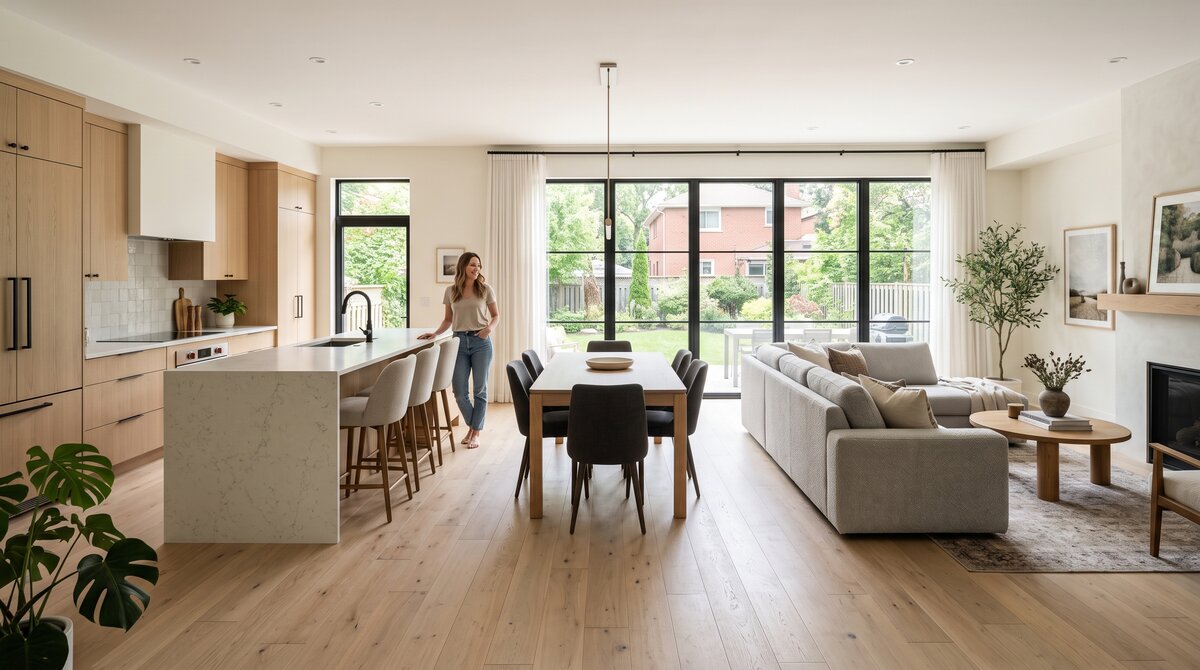
Whole-Home Renovation in the GTA: 2026 Costs, Phasing & Move-Out Guide
A whole-home renovation is the most ambitious project most GTA homeowners ever take on, and in 2026 a comprehensive gut-and-rebuild across Toronto and the 905 suburbs typically runs $150 to $350 per square foot — roughly $300,000 to $700,000 for a average detached home. The wide range comes down to scope, finish level, and how much structure and mechanical work is involved. This guide breaks down realistic 2026 costs, how to phase the work, whether you should move out, and the timeline to expect so you can plan a whole-home renovation without nasty surprises.
Key Takeaways
- A whole-home renovation in the GTA typically costs $150–$350 per square foot in 2026, or roughly $300,000–$700,000 for an average detached home.
- Structural changes, moving the kitchen or bathrooms, and high-end finishes are the three biggest cost drivers.
- Doing the work all at once is usually 15–25% cheaper than phasing it room by room over several years.
- Most families move out for a full gut renovation; living on-site only works when the project is phased and a kitchen and bathroom stay usable.
- A whole-home renovation typically takes 4–9 months on site, plus 1–3 months for design and permits beforehand.
What is a whole-home renovation?
A whole-home renovation means updating most or all of a house in a single coordinated project, rather than one room at a time. It can range from a cosmetic refresh of every room to a full gut that takes the house back to the studs and rebuilds layouts, mechanical systems, insulation and finishes throughout. Most GTA whole-home projects fall somewhere in between — new kitchen and bathrooms, refinished or replaced flooring, updated electrical and plumbing, and often a reworked main-floor layout.
The defining feature is coordination. Because every trade is working in the same house at the same time, sequencing matters enormously. A whole-home renovation is also the right moment to fix things that are awkward to touch later — undersized electrical panels, old galvanized plumbing, poor insulation, or a closed-off floor plan. Tackling them together is far cheaper than revisiting each one as a separate project.
Whole-home renovation costs in the GTA (2026)
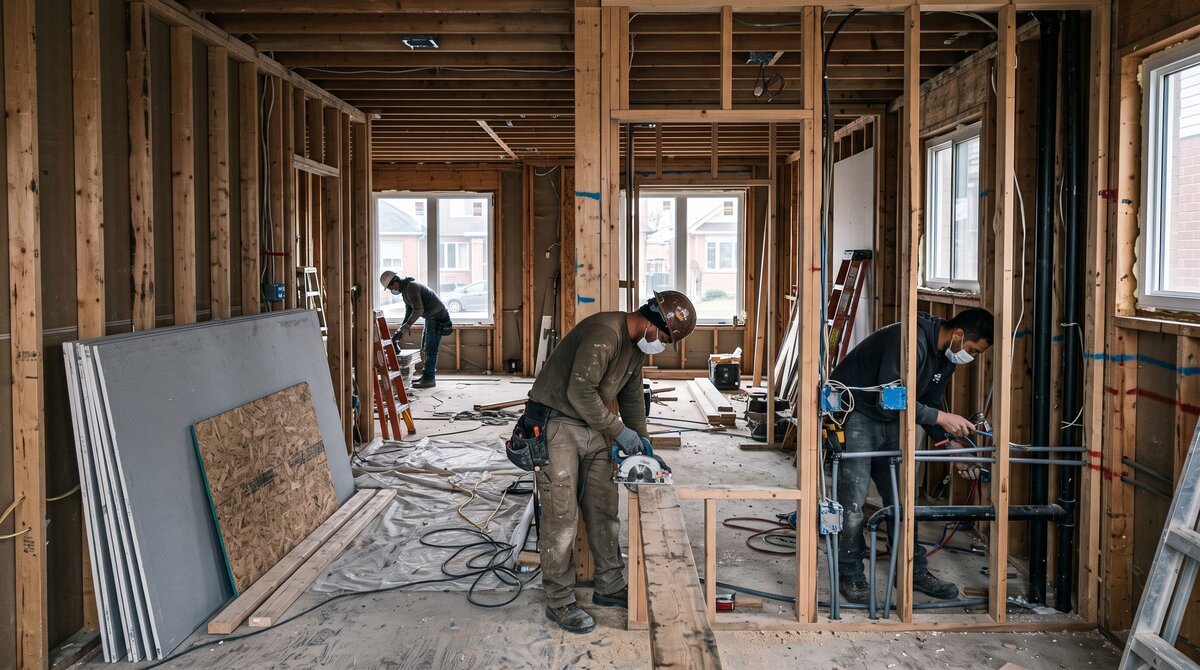
The clearest way to budget is per square foot, then adjust for finish level. The ranges below reflect 2026 pricing across Toronto and the 905.
| Renovation level | Cost per sq ft | 2,000 sq ft home |
|---|---|---|
| Cosmetic refresh (no layout changes) | $75–$130 | $150,000–$260,000 |
| Mid-range gut renovation | $150–$250 | $300,000–$500,000 |
| High-end / structural rebuild | $250–$350+ | $500,000–$700,000+ |
These figures assume a detached or semi-detached home. Condo whole-unit renovations follow different rules and approvals. For context on how individual rooms add up, our kitchen renovation cost guide and bathroom renovation cost guide show where the two most expensive rooms land.
What drives the cost up or down
Three factors move a whole-home budget more than anything else. First, structural changes — removing load-bearing walls, raising ceilings, or adding square footage — bring in engineering, permits and steel. Second, relocating the kitchen or bathrooms means new plumbing and venting runs, which is far more expensive than keeping wet areas in place — our kitchen renovation and bathroom renovation teams plan these wet-area moves carefully. Third, finish level: the gap between builder-grade and high-end materials can double the cost of the same square footage.
You can control the budget without gutting the vision. Keeping plumbing locations, choosing mid-tier finishes in low-traffic rooms, and avoiding structural changes where the existing layout already works are the most effective levers. Avoiding the costliest mistakes matters too — our guide to the most expensive mistakes Toronto homeowners make covers the traps that blow budgets.
Phased vs. all-at-once renovation
Doing the entire home at once is almost always cheaper per square foot than phasing it over several years. You pay for one mobilization, one design process, one permit set, and trades work efficiently without re-setting up the site each time. The trade-off is cash flow and disruption — an all-at-once gut is a large single outlay and usually requires moving out.
Phasing makes sense when budget is spread over time, when you want to live in the home throughout, or when only part of the house genuinely needs work. The key to phasing well is planning the full design up front so early phases do not have to be undone later — for example, sizing the electrical panel and running rough-ins for future phases during the first one. Our step-by-step renovation planning guide is built around exactly this kind of forward planning.
Weighing a full gut against a phased plan? Call 905 Reno at (416) 995-4534 for a free consultation and a clear cost comparison for your home across the GTA.
Should you move out during the renovation?
For a full gut renovation, most families move out — there is no functioning kitchen, the bathrooms are offline, and dust and noise make the house hard to live in for months. Renting for the duration adds cost but speeds the build, because trades can work without protecting occupied spaces or pausing for the household.
Staying in the home only works realistically when the project is phased so that a kitchen and at least one bathroom remain usable throughout. If you do stay, budget for the slower timeline and the daily wear of living on a construction site. Many GTA homeowners compromise: move out for the intense early phases (demolition, mechanical, kitchen) and return once the home is livable for the finishing work.
A realistic whole-home timeline
A whole-home renovation typically takes 4–9 months of on-site work, with 1–3 months of design, selections and permitting before anyone swings a hammer. Larger or structural projects run longer. The biggest schedule risks are permit delays, long lead times on cabinetry and windows, and change orders mid-project.
A typical sequence: design and selections, permit approval, demolition, structural and framing, rough mechanical (plumbing, electrical, HVAC), insulation and drywall, then finishes — flooring, kitchen, bathrooms, trim, paint — and a final inspection. Ordering long-lead items during the design phase, not after demolition, is the single most effective way to keep a whole-home project on schedule. For homeowners weighing an addition as part of the project, our 2026 home addition cost guide covers how added square footage affects the timeline.
Why 905 Reno is the right choice for a whole-home renovation
905 Reno delivers whole-home renovations across Toronto and the 905 — Mississauga, Brampton, Vaughan, Markham, Richmond Hill, Oakville, Burlington and beyond. Whole-home work lives or dies on coordination, and that is what we do best: one team managing design, permits, every trade, inspections and finishing under a single point of contact, so the project stays on schedule and on budget.
We start with a complete design and a fixed scope, so you know the cost and timeline before demolition begins. We pull all permits, coordinate engineering when structure is involved, and protect the parts of your home that are not being touched. As a licensed local renovator with a workmanship guarantee, we treat your largest investment with the care it deserves. Explore our custom home renovation service to see how we manage full-house projects from concept to completion.
Ready to plan your whole-home renovation? Book a free consultation with 905 Reno — call (416) 995-4534 or request a quote online for a detailed plan and budget.
Conclusion
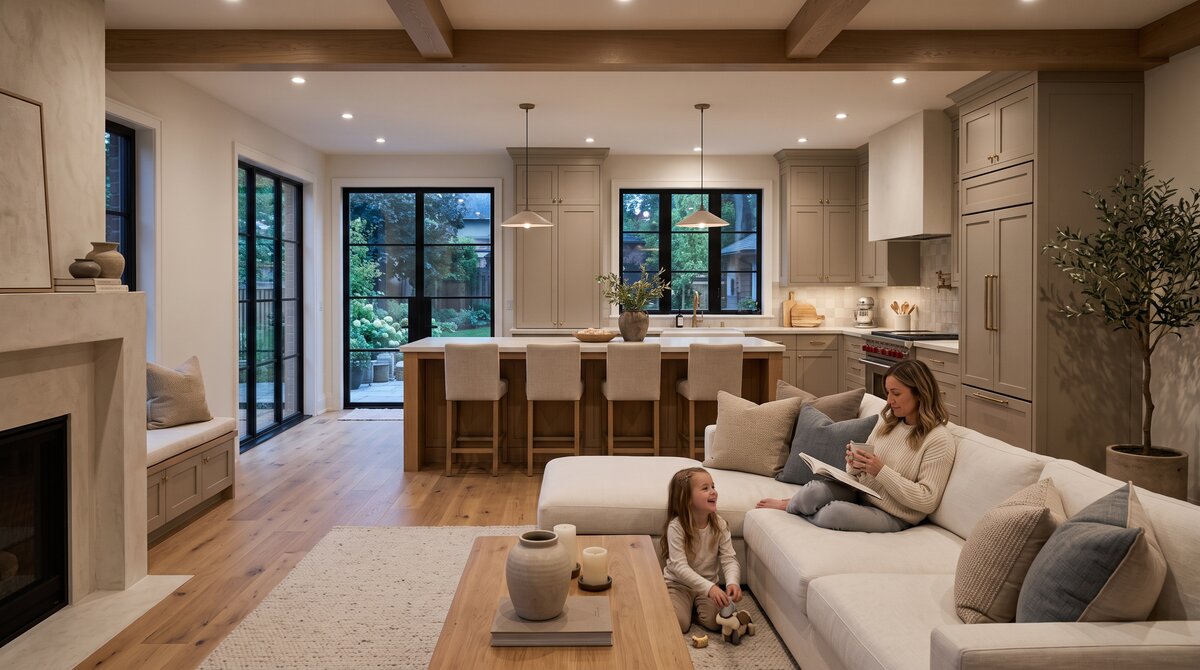
A whole-home renovation is a major undertaking, but with a complete design, a realistic budget of $150–$350 per square foot, and a clear decision on phasing and move-out, it is also the most efficient way to transform a GTA home. Plan the full scope up front, order long-lead items early, and work with one team that coordinates every trade — and your renovation will finish on time and on budget.
Frequently asked questions
How much does a whole-home renovation cost in the GTA?
In 2026, expect $150–$350 per square foot for a gut renovation in Toronto and the 905 — roughly $300,000–$700,000 for an average 2,000 sq ft detached home, depending on structure and finish level.
Is it cheaper to renovate all at once or room by room?
All at once is usually 15–25% cheaper per square foot because you pay for one mobilization, one design and one permit set, and trades work without re-setting up the site. Phasing spreads cost over time but costs more overall.
Do I have to move out during a whole-home renovation?
For a full gut, most families move out because the kitchen and bathrooms are offline for months. Staying is only realistic when the project is phased so a kitchen and one bathroom remain usable.
How long does a whole-home renovation take?
Plan on 4–9 months of on-site work plus 1–3 months of design and permitting beforehand. Structural projects and long material lead times can extend the schedule.
Do I need permits for a whole-home renovation?
Almost always. Structural changes, moved plumbing or HVAC, electrical upgrades, and any change of use require permits under the Ontario Building Code. Your contractor typically manages the applications and inspections.