
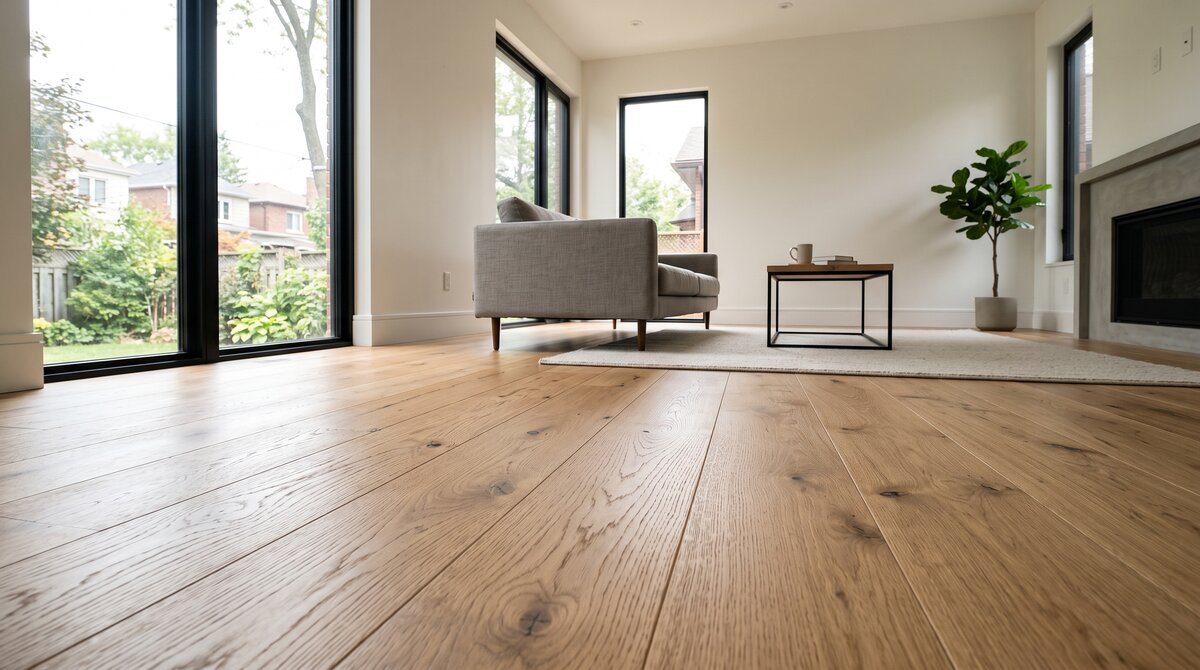
Engineered Hardwood vs Vinyl Plank Flooring: 2026 GTA Costs by Room
Choosing between engineered hardwood vs vinyl plank flooring is one of the most common decisions GTA homeowners face during a renovation, and the right answer depends on the room, your budget, and how the space gets used. In 2026, engineered hardwood typically costs $8–$16 per square foot installed across Toronto and the 905, while luxury vinyl plank runs $4–$9 per square foot. This guide compares cost, durability, water resistance and resale value, then recommends the best pick for each room in a GTA home.
Key Takeaways
- In 2026, engineered hardwood costs $8–$16 per square foot installed in the GTA, while luxury vinyl plank runs $4–$9 per square foot.
- Vinyl plank is fully waterproof, making it the better pick for basements, bathrooms, laundry rooms and entryways.
- Engineered hardwood offers real-wood appeal and adds more resale value in main living areas and bedrooms.
- Engineered hardwood can often be refinished once or twice; vinyl plank cannot be refinished but resists scratches and dents better day to day.
- For most GTA homes, the best results come from mixing both — hardwood in living areas, vinyl plank in wet and high-traffic zones.
Engineered hardwood vs vinyl plank: the basics
Engineered hardwood is real wood: a thin hardwood veneer bonded over layers of plywood or HDF. It looks and feels like solid hardwood but is more stable against humidity swings, which matters in GTA homes that go from dry winters to humid summers. Luxury vinyl plank (LVP) is a synthetic, multi-layer product with a printed wood-look surface and a waterproof core. Modern LVP is convincing underfoot and visually, and it has become the default choice for moisture-prone rooms.
The simplest way to frame the decision: engineered hardwood wins on authenticity and resale, vinyl plank wins on water resistance, scratch resistance and price. Neither is “better” universally — the right choice is room by room.
2026 cost comparison (GTA)
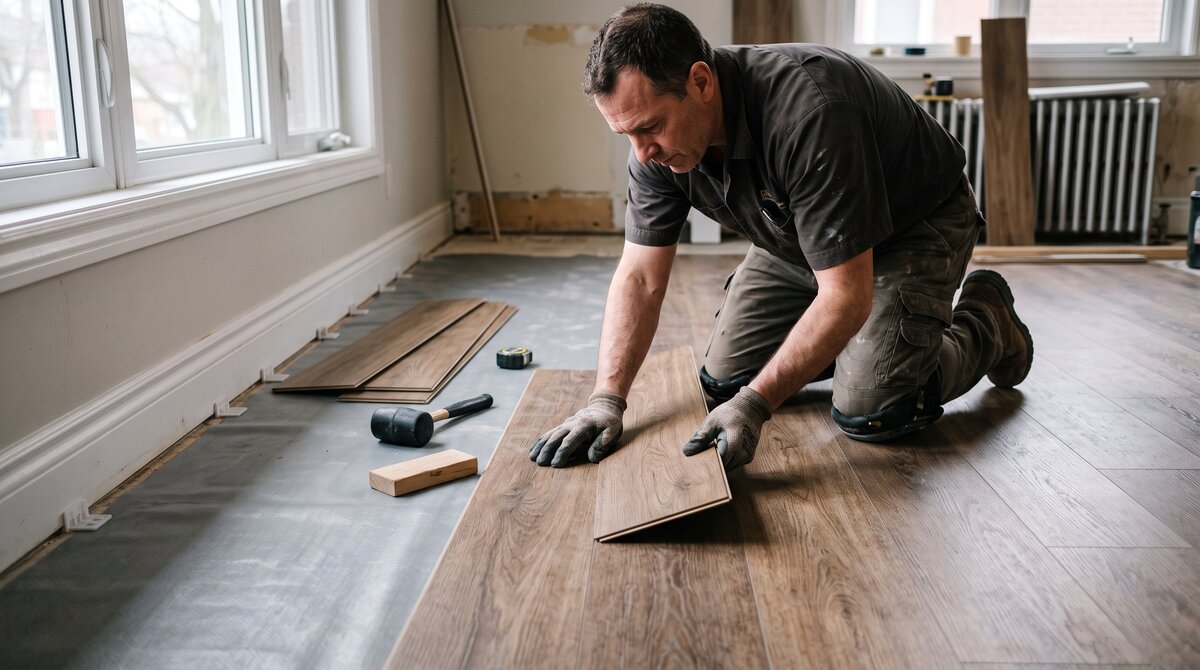
Installed pricing in Toronto and the 905 reflects both material and labour. The table below shows realistic 2026 ranges.
| Factor | Engineered hardwood | Luxury vinyl plank |
|---|---|---|
| Installed cost / sq ft | $8–$16 | $4–$9 |
| Lifespan | 25–40 years | 15–25 years |
| Waterproof | No (water-resistant) | Yes |
| Can be refinished | Usually once or twice | No |
One budgeting note: installed pricing usually covers the flooring, underlayment and labour, but not always the removal and disposal of old flooring or subfloor leveling. On a GTA renovation, tearing out old carpet, tile or laminate and prepping an uneven subfloor can add $1 to $3 per square foot. Ask for an itemized quote so you are comparing like for like between materials and contractors.
Durability and water resistance
Vinyl plank is the more forgiving floor day to day. Its wear layer shrugs off scratches, dents and spills, and a waterproof core means a burst dishwasher hose or a flooded basement will not destroy it. That makes LVP ideal for homes with kids, pets or heavy traffic.
Engineered hardwood is durable too, but it is water-resistant rather than waterproof — standing water will damage it, and it should not go below grade in a basement without careful moisture control. Its advantage is longevity: a quality engineered floor can be sanded and refinished to erase years of wear, something vinyl cannot do. In a flood-prone basement, waterproof flooring is part of a larger moisture strategy — our guide on why basement waterproofing should come first explains why.
Best flooring by room
The smartest GTA homes mix both materials by room. Use engineered hardwood where authenticity and resale matter most, and vinyl plank where water and wear are the priority.
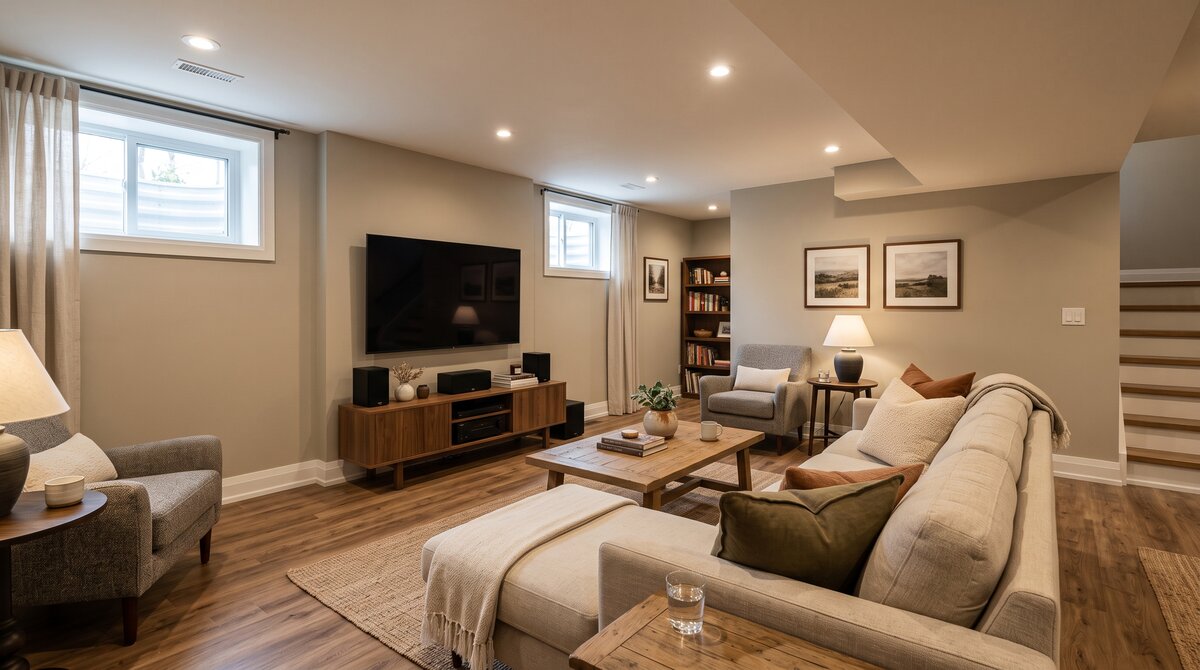
Living room, dining room, bedrooms, hallways: engineered hardwood, for warmth and resale value. Basement: vinyl plank, for waterproofing and comfort below grade. Bathrooms and laundry: vinyl plank or tile. Kitchen: either works, but vinyl plank handles spills better while engineered hardwood looks more premium in an open-concept layout. If you are opening up the main floor, flooring choice ties directly into the design — see how open-concept design adds value to Toronto homes for how continuous flooring makes a space feel larger.
Not sure which floor suits each room? Call 905 Reno at (416) 995-4534 for a free in-home consultation and material samples across the GTA.
Resale value and buyer appeal
Real hardwood still carries the strongest resale signal in the GTA market, especially in main living areas and bedrooms of detached homes. Buyers associate engineered hardwood with quality, and listings frequently highlight it. Vinyl plank has shed its budget reputation and is widely accepted — particularly in basements, condos and rental units where its waterproofing is a genuine selling point.
For an investment property or a basement apartment, vinyl plank is often the smarter spend: lower cost, waterproof, and durable for tenants. In an owner-occupied detached home, engineered hardwood in the main spaces tends to return more at resale. Our look at legal basement renovation trends in the GTA covers what tenants and buyers expect below grade.
Installation and subfloor considerations
Both floors can be installed as floating systems, but the subfloor matters. Vinyl plank is thin and telegraphs imperfections, so the subfloor must be flat and clean — uneven concrete or plywood needs leveling first. Engineered hardwood is more forgiving of minor variations but requires acclimation to the home’s humidity before installation to prevent gapping or cupping.
Below grade, only waterproof flooring belongs directly on concrete, and a moisture barrier is essential. Getting the subfloor prep right is what prevents callbacks a year later — it is the step DIY installs most often skip. A professional installer checks moisture levels, levels the subfloor, and acclimates materials, all of which protect the finished floor.
Two details homeowners often overlook are underlayment and sound. A quality underlayment improves comfort underfoot, reduces hollow echo, and limits sound transfer between floors, which matters in two-storey GTA homes and over finished basement space. Warranties differ too: many engineered hardwood and premium vinyl products carry 20-year-to-lifetime residential warranties, but they only stay valid when the floor is installed to the manufacturer subfloor and acclimation specs. That is one more reason professional installation pays for itself, since a DIY install can void the warranty on an otherwise excellent floor.
Why 905 Reno is the right choice for your flooring
905 Reno installs engineered hardwood, luxury vinyl plank and tile across Toronto and the 905 — Mississauga, Brampton, Vaughan, Markham, Richmond Hill, Oakville and beyond. Flooring is one of the most visible parts of any renovation, and the result depends as much on subfloor prep and acclimation as on the material itself. We handle both, so your floors look right and stay flat for decades.
Whether you are flooring a single room or a whole home, we help you choose the right product for each space, prep the subfloor correctly, and install to a finish that lasts. As a licensed local renovator with a workmanship guarantee, we stand behind every floor we lay. Explore our custom home renovation service, or ask about flooring as part of a kitchen renovation or legal basement renovation.
Ready to choose your new floors? Book a free consultation with 905 Reno — call (416) 995-4534 or request a quote online and get matched to the right floor for every room.
Conclusion
In the engineered hardwood vs vinyl plank debate, there is no single winner — there is the right floor for each room. Use engineered hardwood in living areas and bedrooms for warmth and resale, and vinyl plank in basements, bathrooms and high-traffic zones for waterproofing and durability. Budget $8–$16 per square foot for hardwood and $4–$9 for vinyl plank installed in 2026, and prioritize proper subfloor prep — it is what makes either floor last.
Frequently asked questions
Is engineered hardwood or vinyl plank better for a basement?
Vinyl plank, every time. It is fully waterproof and comfortable on concrete, while engineered hardwood is only water-resistant and can be damaged by below-grade moisture. Pair vinyl plank with a moisture barrier for best results.
Which is cheaper, engineered hardwood or vinyl plank?
Vinyl plank is cheaper — $4–$9 per square foot installed in the GTA in 2026, versus $8–$16 for engineered hardwood. Vinyl also installs faster, which can lower labour costs further.
Does vinyl plank hurt resale value compared to hardwood?
Not in basements, condos or rentals, where its waterproofing is a selling point. In the main living areas of a detached home, engineered hardwood still returns more at resale and signals quality to buyers.
Can engineered hardwood be refinished?
Usually once or twice, depending on the thickness of its hardwood veneer. Thicker-veneer products can be sanded and refinished to erase wear. Vinyl plank cannot be refinished and is replaced when worn.
Which floor is more durable for pets and kids?
Vinyl plank handles daily abuse better — it resists scratches, dents and spills. Engineered hardwood lasts longer overall and can be refinished, but it shows scratches more readily in busy households.