
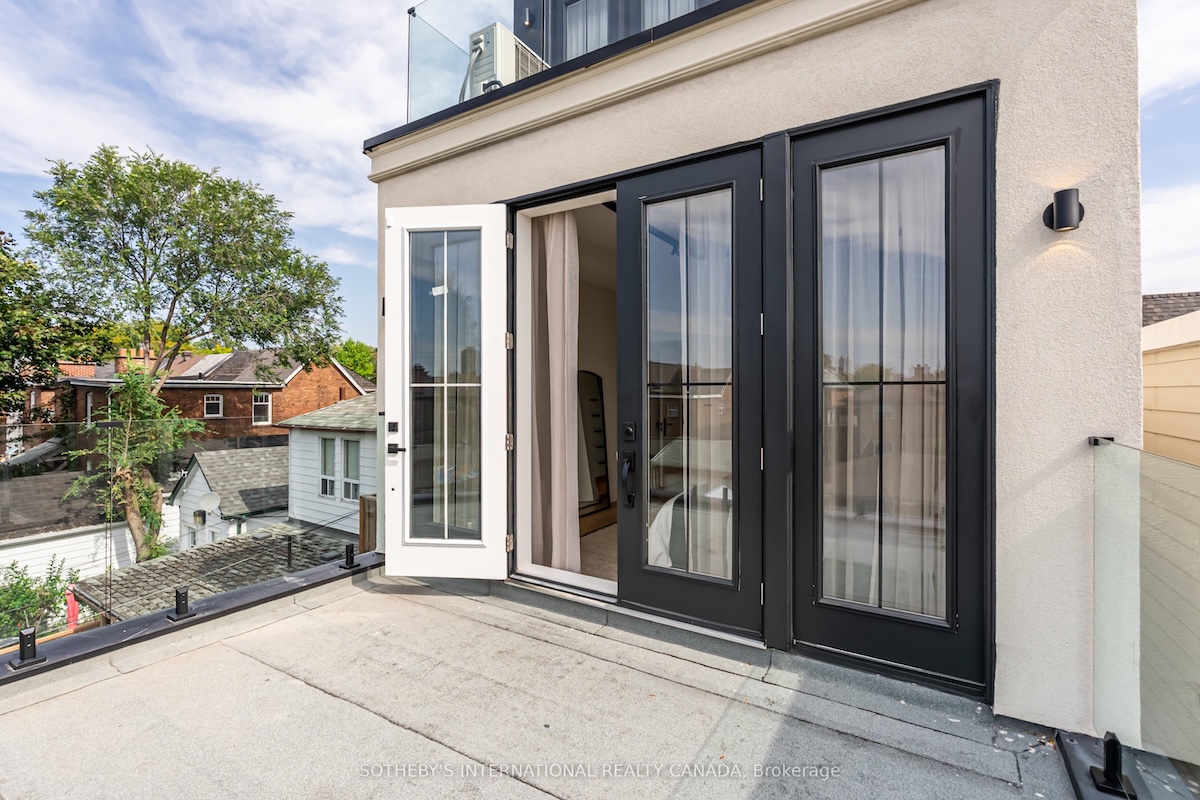
Replacing a patio door before the GTA’s hot months is the single highest-leverage summer renovation move: it cuts solar gain, opens a real indoor-outdoor flow for entertaining, and avoids the August lead-time crunch. A typical sliding patio door replacement in Toronto runs $3,800–$8,500 installed in 2026, with a 4–7 week turn from quote to swap.
Key Takeaways
- 2026 patio door replacement Toronto costs range from $3,800 for a standard vinyl 6-foot slider to $14,000+ for multi-slide or lift-and-slide doors on premium GTA homes.
- Lead times stretch from 4 weeks in May to 9–10 weeks by late July — booking before the long weekend is what gets you installed by summer entertaining season.
- An Ontario Building Code permit is rarely needed for a like-for-like swap, but is required if you widen the rough opening or change a window into a door.
- Low-E coatings, argon-fill and Energy Star Most Efficient ratings can drop solar heat gain by 30–55% — meaningful on west-facing Etobicoke, Vaughan and Mississauga back doors.
- The Canada Greener Homes Loan (interest-free, up to $40,000) still funds qualifying door upgrades alongside Enbridge Save on Energy rebates for GTA homeowners in 2026.
Table of Contents
- Why summer is the deadline for patio door replacement Toronto
- 2026 patio door replacement costs in the GTA
- Sliding, French, multi-slide and pivot — picking the right style
- Glass, frames, and the energy math
- Permits, the Ontario Building Code, and condo bylaws
- Install timeline and what a clean changeover looks like
- Rebates, financing, and stacked incentives in 2026
- Why 905 Reno is the right team for patio door replacement Toronto
- Frequently asked questions
Why summer is the deadline for patio door replacement Toronto homeowners shouldn’t miss
If you’ve spent a single July evening trying to push hot air out through a stuck 1990s sliding door, you already know what we mean. The aluminum slider you inherited with the house is doing two jobs poorly: it leaks conditioned air all winter and traps it all summer. Replacing it before the GTA’s hottest weeks isn’t only a comfort upgrade — it’s a deadline issue. Manufacturer build-to-order queues for the most common 6-foot and 8-foot configurations stretch from a 4-week turn in May to a 9–10 week turn by late July, the moment every homeowner in Leslieville, Riverdale and the Annex realizes their door is the bottleneck on backyard entertaining.
For pool owners in Oakville and Mississauga, the door is also the safety bottleneck. A reliable, smooth, self-latching patio door is what keeps the new pool-fence code working as designed. For families in Markham, Richmond Hill and Vaughan adding a deck or a three-season room, the door is the seam between the existing main floor and whatever you’re building out — get the door wrong and the new project never feels integrated.
The other reason summer matters: this is the renovation window where a same-day swap is actually possible. Cold-weather installs need temporary weatherproofing, dropcloths over hardwood, and a heater running. Between mid-May and late September a competent crew can pop the old door, set the new one, finish trim and have your living room habitable again by dinner.
2026 patio door replacement costs in the GTA
Patio door pricing in the GTA in 2026 has stabilized after three years of supply-chain swings. Vinyl is the volume play; fibreglass and clad-wood occupy the premium tier. The numbers below are installed prices for a clean like-for-like swap — no widening, standard 8-foot ceiling, single-floor access, no condo unit complications.
| Configuration | Material | Installed range (2026) | Typical lead time |
|---|---|---|---|
| 6-ft, 2-panel slider | Vinyl | $3,800 – $5,400 | 3–5 weeks |
| 8-ft, 2-panel slider | Vinyl or fibreglass | $4,900 – $7,800 | 4–6 weeks |
| French double swing | Fibreglass or clad-wood | $5,600 – $9,200 | 5–8 weeks |
| 3-panel slider (9–10 ft) | Fibreglass | $7,200 – $11,500 | 6–9 weeks |
| Multi-slide / lift-and-slide (12 ft+) | Aluminum-clad wood | $11,000 – $24,000 | 10–16 weeks |
Widening the rough opening — say, going from a 6-foot to an 8-foot door — adds a header and drywall repair, easily $1,800 to $3,200. Second-floor balcony doors add $900 to $1,500 for hoisting. For homeowners pricing patio door replacement Toronto alongside a bigger project, our breakdown of the most expensive mistakes Toronto homeowners make covers how skipping envelope details is the top reason renovations underperform on resale.
Sliding, French, multi-slide and pivot — picking the right style for your GTA home
Style is partly aesthetic, but mostly about how the wall opens and where the airflow ends up.
2-panel sliders are the workhorse of GTA back walls. One fixed panel, one operable. Best when the deck or patio is a meaningful step down and you don’t want a swing arc eating outdoor square footage. The operable panel only gives you half the opening — fine for ventilation, less ideal if you want to carry a charcuterie board out without turning sideways.
French doors are the right call for older Toronto homes — Riverdale, the Beaches, Roncesvalles — where the back of the house has period detail you want to honour. Two swinging panels, full opening when both are open, and a much wider design vocabulary for transom and sidelight glazing.
3-panel sliders are how you get a 10-foot opening in a townhouse footprint without a structural rebuild. Two fixed, one operable, or one fixed and two stacking. They work hard in Vaughan, Markham and Richmond Hill new-builds where the kitchen-family room wall already wants to feel like one continuous room with the deck.
Multi-slide and lift-and-slide doors open the wall up entirely. Four, six, even eight panels that stack into a pocket or against an end wall. The fittings are expensive and the install requires a steel sub-sill. We see these most often when clients combine a back-of-house addition with a kitchen renovation — the door becomes the punctuation mark on the whole room. Pivot doors remain a small but loud trend on Forest Hill rebuilds; beautiful, expensive, and rarely what most homeowners actually need.
Glass, frames, and the energy math behind real summer comfort

The single biggest comfort upgrade in a patio door has nothing to do with the frame — it’s the glass. Modern double-glazed units with a Low-E2 (or Low-E3) coating and argon fill drop the solar heat gain coefficient (SHGC) from the 0.55–0.65 range of older clear-glass doors down to 0.27–0.32. For a west-facing back wall in Etobicoke or Oakville, that’s the difference between needing a blackout blind from 4–7 p.m. and being able to live in your living room in late afternoon.
The other number to know is the Energy Rating (ER) score Natural Resources Canada publishes for every door. ER ≥ 34 is the practical floor for new GTA installs; ER ≥ 40 qualifies as Energy Star Most Efficient and unlocks several rebate programs. Triple-glazed patio doors push ER into the high 40s but cost 15–25% more and weigh meaningfully more on the rollers — a real consideration for accessibility-minded households.
Frame material matters too, but less than the glass. Vinyl is the GTA volume choice for a reason: stable, well-insulated, and warranty-friendly. Fibreglass is dimensionally stronger and accepts paint better — useful for clad-wood looks at half the cost. Aluminum-clad wood is the premium material for heritage homes in the Annex or Cabbagetown where the original interior trim is too good to lose.
Permits, the Ontario Building Code, and condo bylaws
A like-for-like patio door swap in Toronto and the surrounding 905 municipalities does not require a building permit. Same opening size, same wall, no structural change — that’s classified as repair or replacement, not construction. The moment you widen the rough opening, change a window into a door, or alter the load above the header, you cross into permit territory under Toronto building permit requirements, and the inspection cycle adds 2–4 weeks to the project.
Condo and townhouse owners in Liberty Village, CityPlace and the downtown rebuild belt have a separate hurdle: condo board approval and exterior consistency rules. Most condo declarations require board sign-off on any door visible from the building exterior, including balcony patio doors. We’ve seen approval take anywhere from 10 days to three months — budget the slower number.
One Ontario Building Code item that’s easy to miss: tempered safety glass is required for any glazed door panel within 600 mm of a walking surface and any panel within 1,500 mm of a swimming pool or hot tub. If you’re upgrading the door at the same time as a pool deck refresh, mention both projects to the same crew so the door specs match the pool code from day one.
Install timeline and what a clean changeover looks like
For a standard 8-foot vinyl slider, the door swap itself is a one-day job for a 2-person crew. The real timeline lives in the calendar:
| Week | What’s happening |
|---|---|
| Week 1 | On-site measure, quote sign-off, deposit, door specification locked. |
| Weeks 2–5 | Manufacturer build-to-order. Vinyl ships fastest, clad-wood slowest. |
| Week 5–7 | Delivery to site, inspection of the unit, install date confirmed. |
| Install day | Old door removed, opening prepped, new door set, levelled, shimmed, flashed, sealed, interior trim, exterior caulk. One full day. |
| Week +1 | Paint touch-up, warranty paperwork registered with Tarion if part of a larger renovation. |
What separates a clean install from a problem install almost always shows up at the sub-sill: the slope, the flashing tape and the back-dam under the threshold are what stop water from finding the subfloor in February. If your patio door is part of a broader main-floor reno, our step-by-step guide to planning a high-end Toronto renovation walks through how to sequence door, deck and interior trim so nothing arrives out of order.
Rebates, financing, and stacked incentives in 2026
The Canada Greener Homes Grant for new applicants paused in early 2024, but the Canada Greener Homes Loan — the interest-free portion, up to $40,000 over 10 years — is still active for GTA homeowners in 2026 and continues to fund qualifying door replacements when bundled with insulation, heat pumps or window upgrades. The Enbridge Home Efficiency Rebate Plus program also remains in market for natural-gas-heated homes, with rebates that frequently pair well with an Energy Star Most Efficient patio door installed as part of a broader envelope upgrade. Confirm current eligibility through Enbridge’s residential rebate page before you sign a quote.
For homeowners pairing the door swap with a kitchen or basement project, financing the whole envelope through a single home-equity line is usually cleaner than chasing one-off rebates. We’ve covered the financial logic of bundling projects in our writeup of home addition ideas that increase property value, where the back-wall door upgrade is one of the highest-ROI line items.
Why 905 Reno is the right team for patio door replacement Toronto homeowners trust

905 Reno has been replacing doors, windows and entire back walls across Toronto, Mississauga, Brampton, Vaughan, Markham, Richmond Hill, Oakville, Burlington, Pickering, Ajax, Whitby and Oshawa since well before patio doors had Energy Ratings on the sticker. We’re a full-service GTA renovation contractor, which matters more than people realize on a “simple” door swap — when the sub-sill is rotten or the header sags, you don’t want to be scrambling for a framer on day two.
Our patio door installs are run by carpenters who also frame additions and finish basements. The flashing detail is by the book. The trim returns are mitred, not butt-jointed. The threshold is bedded in proper sealant, not painter’s caulk. We register every install for manufacturer warranty and, where applicable, Tarion coverage. And because we’re a single-trade-management business, the same project manager who quotes your door is the one on site the day it goes in.
We also book honestly. If the manufacturer’s lead time pushes your install past your summer entertaining date, we tell you on the quote call and offer a shorter-lead-time alternative. That’s why we hit our summer dates: we don’t sell what we can’t deliver.
Book your patio door consultation in time for summer. Call +1-416-995-4534 or request a free quote — our team will measure your opening, walk you through styles and glass options, and lock in a manufacturer slot that gets you installed before the August heat lands.
Frequently asked questions
How long does patio door replacement Toronto installations actually take?
The build-to-order portion is 3–6 weeks for vinyl and fibreglass, 8–16 weeks for multi-slide. The on-site install is a one-day job for a standard 6- or 8-foot door. Booking before mid-June is what gets you installed in time for summer entertaining.
Do I need a permit to replace a patio door in Toronto?
No, not for a like-for-like swap with the same opening size. You do need a permit if you widen the opening, convert a window into a door, or change anything structural above the header. Condo and townhouse owners may also need board approval.
Is a sliding patio door or a French door better for ventilation?
A French door wins on raw ventilation because both panels open. A 2-panel slider only gives you half the opening. A 3-panel slider with a centre operable panel is the best compromise for wide back walls where you want airflow plus a clean view line.
What’s the most energy-efficient patio door for a GTA home?
An Energy Star Most Efficient rated door with a Low-E3 coating, argon fill and an ER score of 40 or higher. Triple-glazing pushes ER into the high 40s if your west-facing wall takes hard afternoon sun.
Are there 2026 rebates for replacing a patio door in Ontario?
The Canada Greener Homes Loan (interest-free, up to $40,000) remains active for qualifying envelope upgrades. Enbridge’s Home Efficiency Rebate Plus program continues to support gas-heated GTA homes when the door is bundled with other improvements. Always confirm program eligibility before signing.
Can a patio door be installed in winter in Toronto?
Yes, but the install window is longer, the workspace needs sealing off, and the sealant cure times are slower. Late spring through early fall is genuinely the right window for a quick, clean swap.