
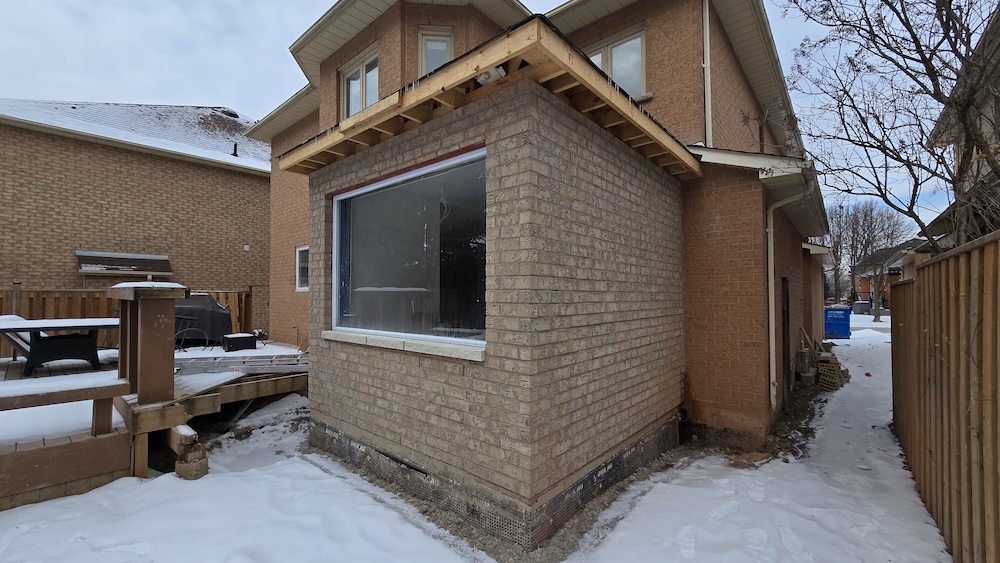
Window replacement Toronto homeowners plan now and install before July is a comfort upgrade and a utility-bill hedge in one move. 2026 GTA installed prices run $750–$2,400 per window, lead times stretch from 4 weeks in May to 10–12 weeks by August, and the Canada Greener Homes Loan plus Enbridge rebates still stack on Energy Star Most Efficient windows installed as part of an envelope upgrade.
Key Takeaways
- 2026 window replacement Toronto pricing lands between $750 (mid-size vinyl casement) and $2,400+ (large fibreglass picture or specialty bay) per window installed.
- Lead times from quote to install run 4–6 weeks in May and 10–12 weeks by August — booking before the long weekend is what gets you installed before the heat lands.
- Low-E3 coatings, argon fill and an ER rating of 34+ drop summer solar heat gain by 30–55%, meaningful on south- and west-facing GTA homes.
- A like-for-like window swap doesn’t need a permit in Toronto, but enlarging an opening or adding an egress window does.
- The Canada Greener Homes Loan (interest-free, up to $40,000) and Enbridge Home Efficiency Rebate Plus remain active for qualifying 2026 upgrades.
Table of Contents
- Why the pre-summer window is the right time
- 2026 window replacement costs in the GTA
- Casement, slider, awning, picture — picking styles per room
- Glass, frames, and the energy math
- Permits, egress, and condo rules
- The two-day install: what a clean changeover looks like
- Rebates, financing, and stacked incentives in 2026
- Why 905 Reno is the right team for window replacement Toronto
- Frequently asked questions
Why the pre-summer window is the right time for window replacement Toronto homeowners
Most GTA homeowners think about windows in November, when the draft from the kitchen casement gets impossible to ignore. By then it’s already too late — the install backlog is locked in and the realistic date is March. The actual right time to commission window replacement Toronto projects is between mid-April and mid-June. The math is simple: by mid-July your west-facing rooms are 4–6°C hotter than the rest of the house, your AC is running 30% longer, and your bill is already showing it.
The trades calendar also matters. Glass manufacturers run on build-to-order schedules: 4 weeks in May, 6 weeks by June, 10–12 weeks by August. The earlier you sign a quote, the shorter your manufacturer lead time. We see the same pattern every spring in Etobicoke, Mississauga, Vaughan and Markham — the calls that come in late April get installed in early June; the calls that come in late June get installed in early September.
The third factor is condition. A south-facing window with a failed seal lets in solar heat all summer; an inert-gas-filled, Low-E3 coated replacement cuts that solar load almost in half. For a 1990s North York or Scarborough home with original double-pane aluminum windows, a full envelope upgrade has produced energy bill savings of 18–28% in our project data — bigger than most heat-pump swaps.
2026 window replacement costs in the GTA
Window pricing in the GTA in 2026 has settled after the supply volatility of the early 2020s. Vinyl remains the volume choice; fibreglass and aluminum-clad wood occupy the premium tier. The numbers below are installed prices per window for a clean like-for-like replacement — no enlargement, single-floor access, standard 2-story home.
| Window type | Material | Installed range (per window) | Lead time |
|---|---|---|---|
| Mid-size casement | Vinyl | $750 – $1,150 | 4–5 weeks |
| Double-hung / slider | Vinyl | $650 – $1,050 | 4–5 weeks |
| Large picture window | Fibreglass | $1,400 – $2,400 | 5–7 weeks |
| Bay / bow (3–4 lite) | Fibreglass or clad-wood | $3,200 – $6,800 | 7–10 weeks |
| Whole-home (12–18 windows) | Vinyl mix | $12,000 – $26,000 | 6–9 weeks |
What pushes a window install above the typical range: enlarging the rough opening (adds framing + drywall + paint, $400–$800/window), removing and replacing the brick mould on heritage Cabbagetown and Annex homes, and replacing windows on second-floor or third-floor walls where lift equipment is needed. Whole-home projects also pick up volume discounts — the per-window price drops 10–15% when 12+ units are quoted together.
For homeowners thinking about windows as part of a bigger upgrade, our deep-dive on the most expensive mistakes Toronto homeowners make covers how skipping the envelope (windows + doors + insulation) is the #1 reason a $200k reno underperforms on comfort and resale.
Casement, slider, awning, picture — picking styles per room
The right window for a room isn’t a brand decision — it’s a function decision. Each style has a job:
Casement windows are the best-sealing, best-ventilating GTA workhorse. The whole sash swings outward on a hinge, so when it’s closed the gasket compresses cleanly all the way around. They’re the right call for kitchens, primary bedrooms, and any room you actually want to feel airflow in. The downside: the sash has to clear shrubs and AC condensers outside.
Double-hung and single-hung sliders are the traditional choice for older Toronto homes — Beaches, Riverdale, Bloor West Village — where casements would look wrong on the elevation. They seal slightly less well than casements, but the cleanability and the look matter on heritage facades.
Awning windows hinge at the top and open outward at the bottom. They’re the small-but-useful pick for bathrooms and basements: privacy, ventilation, and they can stay open in a light rain.
Picture windows are fixed glass — no opening sash. They’re the right pick for view-only walls (high lofts in Liberty Village condos, vaulted living rooms in Vaughan custom builds) and they’re the cheapest per-square-foot because there’s no hardware. Pair with a casement or two beside them for ventilation.
Bay and bow windows project outward and add interior shelf depth. They’re a design element first, a ventilation element second. The install is more complex because the framing is custom — budget the longer lead time and the higher install cost.
Glass, frames, and the energy math behind a real summer comfort upgrade
The biggest comfort upgrade in a modern window is the glass package, not the frame. Double-glazed units with a Low-E2 or Low-E3 coating and argon fill drop the solar heat gain coefficient (SHGC) from ~0.55 in 1990s clear glass to 0.27–0.32 in a 2026 Energy Star window. For a west-facing Etobicoke or Mississauga family room with hard 4–7 p.m. sun, that’s the difference between blackout blinds and being able to actually use the room.
The Energy Rating (ER) score from NRCan’s Energy Star Canada program is the number to know. ER 34 is the modern floor; ER 40+ qualifies as Energy Star Most Efficient and unlocks several rebate streams. Triple-pane windows push ER into the high 40s, cost 15–25% more, and weigh more on the hardware — usually overkill except on north walls and homes with serious comfort goals.
Frame material matters but less than the glass: vinyl is the GTA volume pick (stable, well-insulated, warranty-friendly); fibreglass is dimensionally stronger and accepts paint; aluminum-clad wood is the heritage-home premium when interior trim matters. Avoid all-aluminum frames in residential applications — they conduct heat aggressively and condense badly in winter.
Permits, egress, and condo rules
A like-for-like window swap in Toronto and the surrounding 905 municipalities does not require a building permit. Same opening size, same wall, no structural change is classified as replacement, not construction. The moment you enlarge the opening, change a window into a door, lower a bedroom window to meet egress, or move a header, you cross into permit territory under Toronto building permit requirements.
One Ontario Building Code item that affects every basement window upgrade: every habitable basement room (most commonly the bedroom in a finished basement) must have an egress window — minimum 0.35 m² openable area with no dimension less than 380 mm — opening directly to grade or into a properly sized window well. If you’re combining a window project with a legal basement renovation, the egress window is the gate that the permit pivots on.
Condo and townhouse owners in CityPlace, Liberty Village and Yorkville have a separate hurdle: declaration rules and exterior consistency. Most condo boards require approval for any window visible from outside the building, and the approval process can run 2–8 weeks depending on the building.
The two-day install: what a clean window changeover looks like
A typical whole-home window replacement on a 2,200 sq ft GTA two-story home runs 2–3 days on site for a 14-window project, plus a half-day for trim returns and paint touch-up if needed. The shape of those days:
| Day | What’s happening |
|---|---|
| Pre-day | Furniture moved 4 ft from windows, blinds removed, drop cloths staged. |
| Day 1 | Main-floor windows out, new units set, levelled, shimmed, foam-sealed, flashed, exterior caulk. |
| Day 2 | Second-floor windows replaced, interior trim returns, paint prep. |
| Day 3 | Trim install, final caulk, paint touch-up, site cleanup, warranty walk-through. |
What separates a clean install from a callback is the flashing detail at the head and the sill. A properly installed window has flashing tape that laps shingle-style — sill first, jambs over sill, head over jambs — so any water that gets behind the brick or siding sheds outward instead of inward. We treat this 20-minute detail per window as the difference between a 10-year install and a 25-year install.
For homeowners pairing window replacement with a broader interior reno, our step-by-step planning guide covers how to sequence trim, paint and floor refinishing so nothing gets done twice.
Rebates, financing, and stacked incentives in 2026
The Canada Greener Homes Loan — the interest-free portion, up to $40,000 over 10 years — remains active for GTA homeowners in 2026 and continues to fund qualifying envelope upgrades including Energy Star Most Efficient windows when bundled with insulation or heat-pump retrofits. The Enbridge Home Efficiency Rebate Plus program also remains in market for natural-gas-heated homes, with rebates that frequently pair well with an ER 40+ window package. Confirm current eligibility on Enbridge’s residential rebate page before signing.
For homeowners bundling windows with other 2026 upgrades, financing the envelope through a single home-equity line is usually cleaner than chasing rebates one at a time. Our writeup of home addition ideas that increase property value covers where envelope upgrades sit in the ROI hierarchy.
Why 905 Reno is the right team for window replacement Toronto homeowners trust

905 Reno is a full-service GTA renovation contractor — kitchens, bathrooms, basements, additions, and the envelope work that pulls them all together. Our window installs are run by carpenters who also frame additions and finish trim, which matters more than people realize when the rough opening turns out to be out of square or the original sill is rotted. The flashing detail is done properly. The trim returns are mitred, not butted. The exterior caulk line is sealed against the brick mould, not against the siding face.
We replace windows across Toronto, North York, Etobicoke, Scarborough, Mississauga, Brampton, Vaughan, Markham, Richmond Hill, Oakville, Burlington, Pickering, Ajax, Whitby, Oshawa, Aurora, Newmarket and Bowmanville. Every install is registered for manufacturer warranty and, where applicable, integrated with Tarion coverage if the work is part of a larger renovation. Same project manager from quote to walk-through — single point of accountability, no handoffs.
Book your pre-summer window assessment. Call +1-416-995-4534 or request a free quote — our team will measure your openings, walk you through styles and glass options, and lock in a manufacturer slot that gets you installed before the heat lands.
Frequently asked questions
How long does whole-home window replacement Toronto installations actually take?
The on-site portion is 2–3 days for a typical 12–18 window project on a 2,200 sq ft GTA home. The manufacturer build-to-order portion is 4–6 weeks in May, stretching to 10–12 weeks by August.
Do I need a permit to replace windows in Toronto?
No, not for like-for-like swaps with the same opening size. A permit is required if you enlarge the opening, change a window to a door, add an egress window in a basement, or change anything structural.
What’s the most energy-efficient window for a Toronto home?
An Energy Star Most Efficient rated unit with Low-E3 coating, argon (or krypton) fill, and an ER rating of 40 or higher. Triple-pane pushes ER higher but adds weight and cost — overkill for most south-facing GTA installations.
Are there 2026 rebates for window replacement in Ontario?
The Canada Greener Homes Loan (interest-free, up to $40,000) remains active for envelope upgrades. Enbridge’s Home Efficiency Rebate Plus program continues to support gas-heated GTA homes when windows are bundled with other improvements.
Should I replace all my windows at once or in phases?
All-at-once almost always wins on cost — volume discounts run 10–15% per window, mobilization is one trip, and the energy savings start day one. Phasing makes sense only if cash flow forces it.
Will new windows actually cut my summer cooling bill?
Yes — meaningfully. A whole-home upgrade from 1990s aluminum to modern Low-E3 argon-filled windows typically cuts summer AC runtime by 20–30% in our GTA project data, with the biggest gains on west- and south-facing walls.