

Winter Renovations in the GTA: What to Build Nov–Mar (2026–27)
Most GTA homeowners assume renovation season ends when the leaves come down. In practice, November through March is the best-value window of the year for interior work, and a winter renovation — a basement, a kitchen, a bathroom, a second unit — can save 5–15% on labour, start weeks sooner, and finish before the spring rush drives prices back up. The trade-off is that some projects genuinely should wait for warmer weather. This guide covers what to build in a winter renovation across Toronto and the 905, what to postpone until April, how contractors price the off-season, and how to plan a 2026–27 winter project so it is done by the time patio season returns.
Table of Contents
Key Takeaways
- A winter renovation in the GTA typically prices 5–15% below the same job booked for May–September, because contractor demand drops sharply after November.
- Basements, kitchens, bathrooms, legal second units and interior structural work are ideal winter projects — everything happens inside a heated envelope.
- Concrete footings, exterior masonry, roofing, exterior painting and most additions should wait for sustained temperatures above 5°C, usually mid-April in Toronto and the 905.
- Permit review times in most GTA municipalities are shortest between December and February, often 2–4 weeks instead of 6–10.
- Booking a winter start by mid-October is what secures the off-season pricing; by January the spring calendar is already filling.
Why winter is the off-season advantage in the GTA
Renovation demand in Toronto and the 905 follows the weather. Calls spike in March and April, crews are fully booked from May through September, and the calendar empties out after Remembrance Day as exterior work stops and homeowners turn their attention to the holidays. That seasonal gap is the whole opportunity: the same crews, the same trades and the same suppliers are available in January at shorter lead times and, for most contractors, a lower margin than they need in July.
The savings are not only on labour. Cabinet and tile suppliers run their slowest quarter in Q1 and discount to move inventory, permit desks in Mississauga, Vaughan and Markham are quieter, and dumpster and equipment rentals are easier to book. For a family that can live with an interior project during the cold months, a winter renovation often means a kitchen or basement that would have started in June is finished before the May long weekend.
The best winter renovation projects
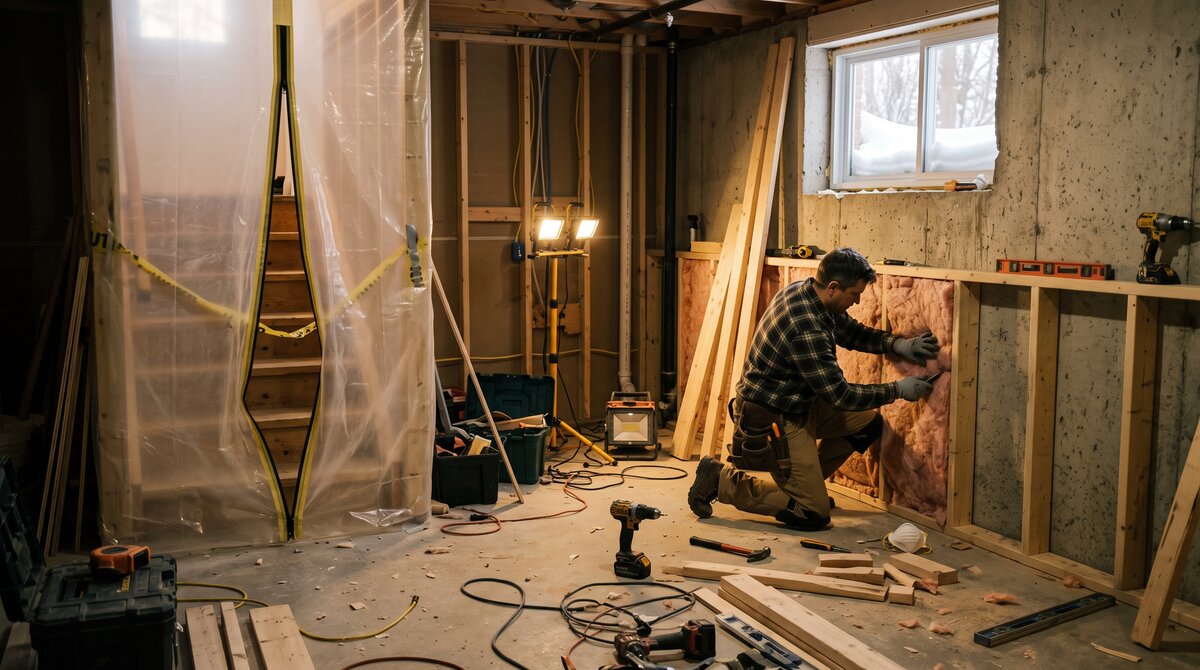
The rule is simple: if the work happens inside the existing heated envelope, winter is a good time to do it. The strongest candidates in GTA homes are:
- Basement finishing and legal second units. Framing, insulation, drywall, flooring and the bathroom all happen below grade and out of the weather. Underpinning and interior slab work are also fine in winter because the ground inside the foundation does not freeze. Start with our legal basement renovation cost guide.
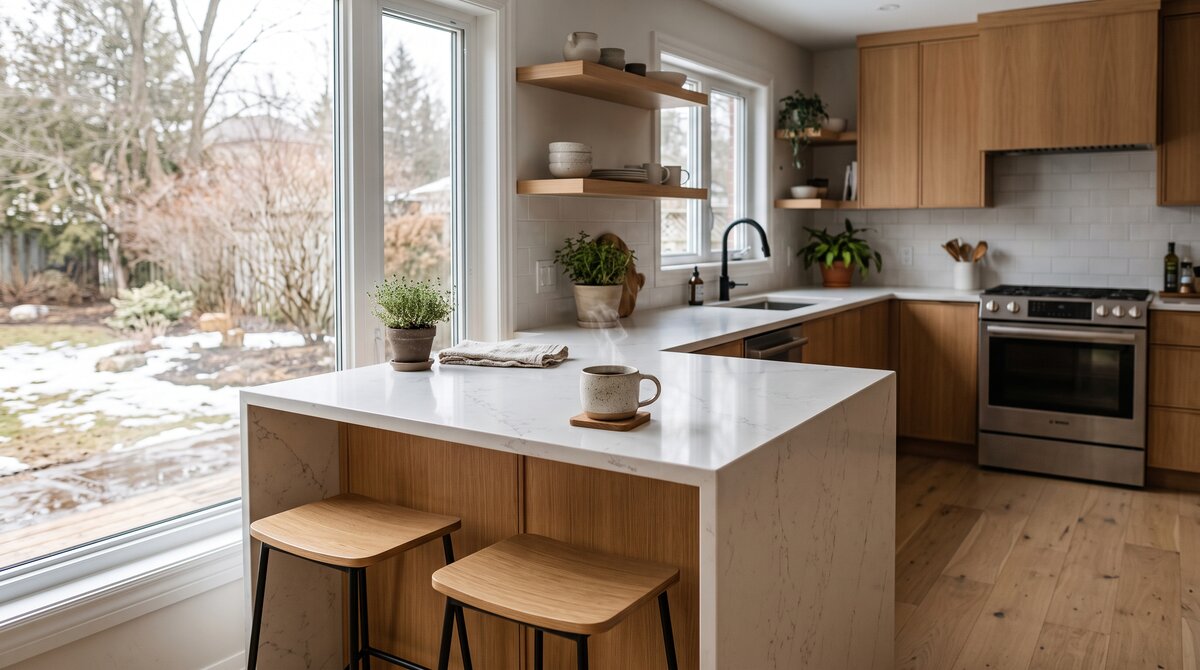
- Kitchen renovations. Demolition, plumbing and electrical rough-in, cabinetry and counters are all interior. Winter is when cabinet lead times are shortest.
- Bathroom renovations and ensuites. Tile, waterproofing, fixtures and heated floors — see our heated bathroom floor guide — are perfect cold-weather jobs, and you will feel the result immediately.
- Interior structural changes. Removing a load-bearing wall, opening a kitchen to the living room or reframing a stair are winter-friendly because the beam and posts go in from inside.
- Interior painting, flooring and millwork. Modern low-VOC paints and engineered floors acclimatize well in a heated home; the only rule is to keep humidity between 35–50% during and after installation.
- Home offices, mudrooms and closets. Small interior builds that never justify a summer slot get done quickly in the off-season.
Want your basement or kitchen done before spring? 905 Reno books winter starts across Toronto and the 905 with off-season pricing. Call (416) 995-4534 or request a free quote.
What to wait on until spring
Some work is either impossible or a false economy in a GTA winter. Concrete and mortar need sustained temperatures above roughly 5°C to cure properly; footings for an addition, a new porch or a deck can be poured with heated enclosures and additives, but the cost and risk climb. Exterior masonry, stucco and exterior painting need the same warmth. Asphalt roofing, window and door replacement, and siding are all possible in cold weather but slower and harder to seal well, and most homeowners do not want an exterior wall open in January.
The practical list to postpone until mid-April: full home additions and second-storey additions (the foundation and framing stages), decks and porches, exterior painting and stucco, landscaping, pools and hardscape, and any garage conversion that requires new footings or exterior openings. Our whole-home renovation guide shows how to sequence a large project so the interior phases run through winter and the exterior phases land in spring.
Winter renovation cost: what the off-season saves
Winter renovation cost in the GTA runs below peak-season pricing for the same scope. The table gives realistic 2026–27 comparisons for common interior projects, based on a licensed, permitted job with mid-range finishes.
| Project | Peak season (May–Sep) | Winter start (Nov–Mar) |
|---|---|---|
| Basement finish (800–1,000 sq ft) | $70,000–$110,000 | $62,000–$100,000 |
| Mid-range kitchen renovation | $55,000–$90,000 | $50,000–$82,000 |
| Full bathroom renovation | $25,000–$45,000 | $22,000–$41,000 |
| Legal second unit (basement) | $90,000–$150,000 | $80,000–$140,000 |
The saving comes from labour availability, supplier discounts and shorter permit queues rather than cheaper materials. It is real but not enormous — the bigger win for most families is time: a winter start means the project is finished before the summer, and before the spring price increases that suppliers typically announce in March and April.
Living through a winter renovation
The one honest downside of a winter renovation is living with it. In a heated home the disruption is manageable with a few rules. Keep the work zone sealed with zipper doors and negative-air dust control so the rest of the house stays warm and clean. Confirm the furnace stays operational or that temporary heat is in the contract — the house must stay above freezing for plumbing and above 15°C for drywall compound and paint to cure. Plan a temporary kitchen (microwave, kettle, mini-fridge) if the kitchen is the project, and expect a two-to-four-week stretch of takeout.
Site logistics change too. The crew needs a cleared path for material delivery through snow, the driveway or lawn may host a dumpster that can be hard to remove after a heavy storm, and daylight is short, so most work happens between 8 a.m. and 4 p.m. None of this is a reason not to build; it is a reason to pick a contractor who runs winter projects routinely. Our post on the most expensive renovation mistakes Toronto homeowners make covers the planning traps that hurt most in the off-season.
Planning timeline for a Nov–Mar build
A winter renovation rewards early planning because the savings depend on booking before the calendar fills. A realistic schedule for the 2026–27 season looks like this:
- September–mid-October: consultations, design and a fixed-scope quote. This is when off-season pricing is locked in.
- October: permit application. Any project that alters structure, plumbing or adds a unit needs one under the Ontario Building Code; review times in Toronto and the 905 are typically 2–6 weeks in the fall.
- November–December: demolition, structural and rough-in work. Order cabinets, tile and fixtures now so lead times land in January.
- January–February: insulation, drywall, tile, flooring and cabinetry. This is the quietest, most productive stretch of the year for interior trades.
- March: finishing, fixtures, paint and final inspections. Exterior items that were deferred (a deck, exterior paint, landscaping) get booked for late April.
Choosing the right partner matters more in winter than in summer, so take a look at our 10 questions to ask before hiring a contractor in Toronto before you sign.
Why 905 Reno is the right choice for a winter renovation
905 Reno runs interior renovations straight through the winter across Toronto and the 905 — Mississauga, Brampton, Vaughan, Markham, Richmond Hill, Oakville, Burlington, Pickering, Ajax and Whitby. Our crews are set up for cold-weather sites: sealed work zones, dust control, temporary heat where it is needed, and scheduling built around short days and snow. Because we run legal basement renovations, kitchen renovations and bathroom renovations as core services, the projects that suit winter best are the ones we build most.
We price winter starts with the off-season in mind and sequence larger custom home renovations so the interior phases run November to March and the exterior phases land in spring. Every project comes with a fixed-scope quote, a written schedule, permits handled from application to final inspection and a workmanship guarantee.
Ready to book a winter start? Contact 905 Reno for a free consultation — call (416) 995-4534 or request a quote online and we will lock in off-season pricing for your 2026–27 winter renovation.
Conclusion
A winter renovation is the GTA’s best-kept scheduling secret: basements, kitchens, bathrooms, second units and interior structural work cost less, start sooner and finish before the spring rush when they run November through March. Leave concrete, masonry, exterior finishes and additions for warmer weather, plan the logistics of living in the house, and book by mid-October to secure the off-season rate. Done that way, the project that would have eaten your summer is finished before it starts.
Frequently Asked Questions
Is winter a good time to renovate in Ontario?
Yes, for interior work. Contractor demand in the GTA drops after November, so basements, kitchens, bathrooms and second units typically cost 5–15% less and start sooner between November and March. Exterior and concrete work should wait for sustained temperatures above 5°C.
What renovations can you do in the winter?
Anything inside the heated envelope: basement finishing, legal basement apartments, kitchen and bathroom renovations, interior structural changes such as removing a load-bearing wall, flooring, painting, millwork, home offices and mudrooms. Underpinning and interior slab work are also fine in winter.
What renovations should you not do in winter?
Concrete footings, additions, decks and porches, exterior masonry and stucco, exterior painting, landscaping and pools. These need warm, dry conditions to cure and seal properly, and heated enclosures add cost and risk in a GTA winter.
Is it cheaper to renovate in the winter?
Usually. Labour is the main saving because crews have open capacity in the off-season; suppliers also discount cabinets and tile in their slow quarter and permit queues are shorter. Expect roughly 5–15% off the same scope priced for peak summer months.
Can you pour concrete in the winter in Ontario?
It is possible with heated enclosures, insulated blankets and admixtures, but it is more expensive and riskier than waiting. For a residential addition or deck in the GTA, most contractors schedule footings for mid-April onward when ground temperatures are reliably above freezing.
When should I book a winter renovation?
By mid-October for a November or December start. Design, quoting and permits take 4–8 weeks, and off-season pricing depends on locking the crew’s calendar before the spring bookings begin arriving in January and February.